Over the last decade, the topics of corruption and recovery of its proceeds have steadily risen in the international policy agenda, with the entry into force of the United Nations Convention against C
The goals of universal health coverage (UHC) are to ensure that all people can access quality health services,to safeguard all people from public health risks, and to protect all people from impoveris
Public resources - if invested well in public infrastructure and services - can catalyze private and community efforts and unleash an inclusive growth and development process. But public investment at
This report provides an overview of arguments explaining the risk of corruption. Corrupt acts are subject to decision making authority and assets available for grabbing. These assets can be stolen, cr
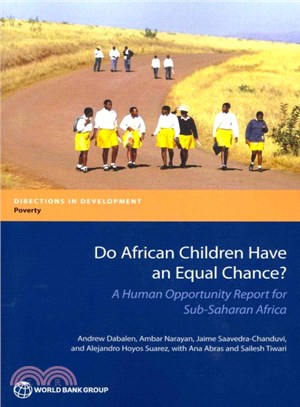
We have long known that a person’s chance of success in life is deeply influenced by early access to education, health services, safe water, and nutritious food. This in turn improves the likelihood t
The Global Monitoring Report 2014/2015 will, for the first time, monitor and report on the World Bank Group’s (WBG) twin goals of ending extreme poverty by 2030 and boosting shared prosperity, while c
The World Bank Group A to Z provides the most concise and essential information about the mission, policies, procedures, products, and services of the new World Bank Group. With more than 280 entries
Despite recent advances in important aspects of the lives of girls and women, pervasive challenges remain. These challenges reflect widespread deprivations and constraints and include epidemic levels
Simulating Distributional Impacts of Macro-dynamics: Theory and Practical Applications is a comprehensive guide for analyzing and understanding the effects of macroeconomic shocks on income and consum
This World Bank review, Governance of Indian State Power Utilities: An Ongoing Journey, is a first attempt to systematically examine the quality of corporate and regulatory governance in the Indian po
Logged On looks at mobile and smart phone technology through the lens of good government management. How will developing governments deliver goods and services that citizens care about? How will gover
Corruption has a devastating impact on developing and transitional countries. An estimated $20 billion to $40 billion per year are stolen by public officials from developing and transition country jur
The weak economic performance and insufficient and low-quality job creation in Tunisia is primarily the result of an economic environment permeated by distortions, barriers to competition, and excessi
Building and operating successful public institutions is a perennial and long-term challenge for governments, which is compounded by the volatile conditions found in fragile settings. Yet some governm
Ethiopia’s model for delivering basic services appears to be succeeding and to confirm that services improve when service providers are more accountable to citizens. As discussed in the World Developm
This Toolkit provides an overall framework with practical tools and information to help policymakers design and implement corporate governance reforms for state-owned enterprises. It covers the key el
Africa needs power - to grow its economies and enhance the welfare of its people. Power for all is still a long distance away – two thirds of the population remains without electricity and enterprises
This Public Expenditure Review (PER) provides an integrated perspective on Iraq’s need to provide better public service delivery, while maintaining macroeconomic stability and fiscal discipline. The a
Gabon is an upper middle income country, with reasonable spending on health, however, its health outcomes resemble that of a country that is low / low-middle income. Where has Gabon gone wrong, and wh
One out of every three dollars invested abroad in 2012 was originated in multinationals from developing countries. This study sheds light on the characteristics, motivations, strategies, and needs of
The International Benchmarking Network for Water and Sanitation Utilities of the World Bank’s Water and Sanitation Program (IBNET) has been involved in water sector monitoring since 1997. It has set a
India has been one of the world’s leading developing countries in providing electricity to both rural and urban populations. The country’s rural energy policies and institutions have contributed grea
In the last 30 years, China’s record economic growth lifted half a billion people out of poverty, with rapid urbanization providing abundant labor, cheap land, and good infrastructure. While China has
This study documents the effects of the 2008–09 global financial crisis on poverty in Latin America and the Caribbean (LAC). In doing so, it describes and decomposes the effects of the crisis on pover
The goals of universal health coverage (UHC) are to ensure that all people can access quality health services, to safeguard all people from public health risks, and to protect all people from impoveri
Skills development in Ghana encompasses foundational skills, transferable/soft-skills, and technical and vocational skills. This report focuses on one segment of this skills development system: formal
The World Bank Group is currently engaged in reflection and debate on how to improve the delivery of development support. Part of this debate concerns strengthening the knowledge agenda. The findings
The extent of urban air pollution in Pakistan—South Asia's most urbanized country—is among the world’s most severe, significantly damaging human health, quality of life, and the economy and environmen
This World Bank review of India’s power sector assesses state-wise progress in implementing the government’s reform agenda two decades after the liberalization of India’s economy and a decade after th
Fragile and conflict-affected states (FCS) have become an important focus of World Bank Group assistance in recent years as recognition of the linkages between fragility, conflict, violence, and pover
The analysis in this report confirms the findings of previous studies that trade liberalization improves aggregate welfare and is in the long run associated with higher employment and wages. The analy
This publication is part of the Bank’s multiyear program to enhance its knowledge of HRH policies. The program’s ultimate objective is to strengthen knowledge and capacity to collect evidence, analyze
Empirical research has found that entrepreneurial activity correlates positively with innovation and job creation, and governments around the world have shown a growing interest in interventions that
This study reviews the role and workings, with their strengths and weaknesses of last-resort income support (LRIS) programs in Eastern Europe and Central Asia. It draws on a combination of household
The Great East Japan Earthquake (GEJE) was the first disaster ever recorded that included an earthquake, a tsunami, a nuclear power plant accident, a power supply failure, and a large-scale disruption
Over seven million teachers file into classrooms across Latin America and the Caribbean every day. These women and men represent four percent of the region’s overall labor force, over twenty percent
This Toolkit provides a framework, guidelines, and practical tools for conducting an analysis and diagnostics of trade competitiveness of the services sector. The methods of analysis are fully customi
This Little Data Book presents tables for over 213 economies showing the most recent national data on key indicators of information and communications technology (ICT), including access, quality, affo
Education has played an important role in making Vietnam a development success story over the last twenty years. In the 1990s and early 2000s Vietnam experienced rapid economic growth and poverty redu
The unanticipated spike in international food prices in 2007-08 hit many developing countries hard. International prices for food and other agricultural products increased by more than 100 percent bet