This book is a collection of articles, written by both academics and practitioners as an evidence base for citizen engagement through information and communication technologies (ICTs). In it, the auth
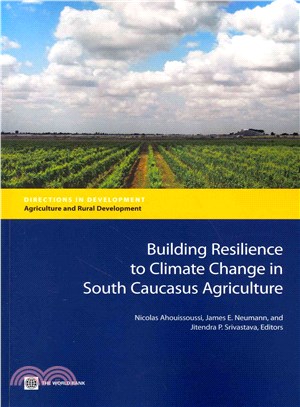
This book illustrates the World Bank’s commitment to assist countries to respond to the opportunities and challenges posed by climate change. Undertaken in collaborative partnership with policy makers
Agricultural Land Redistribution and Land Administration in Sub-Saharan Africa: Case Studies of Recent Reforms focuses on “how” to undertake land reforms in Sub-Saharan Africa, but with relevant lesso
The book provides information on the trends in multiple dimensions of inequality, analyzes the drivers of inequality, and identifies policies for shared prosperity in South Asia. The first part of th
Entrepreneurship has attracted global interest for its potential to catalyze economic and social development. Research suggesting that certain entrepreneurial mindsets and skills can be learned has gi
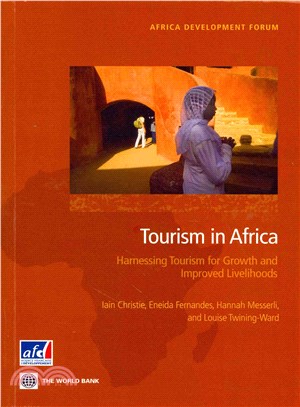
Tourism energizes economies and fuels the economic transformation of countries from Cape Verde to South Africa. Its benefits are clear: it can trigger infrastructure improvements, create good jobs, in
The report first summarizes the key findings from the following three studies in three provinces (Guizhou, Jilin, Shandong): (a) a demand survey to assess rural ICT access and attitudes; (b) a library
The Little Data Book 2014 is a pocket edition of World Development Indicators 2014. It is intended as a quick reference for users of the World Development Indicators database, book, and mobile app. Th
A new look and new ways to access the world’s premier source of development dataLooking for accurate, up-to-date data on development issues? World Development Indicators (WDI) is the World Bank’s prem
The World Bank has recently defined two strategic goals: ending extreme poverty and boosting shared prosperity. Shared prosperity is measured as income growth among the bottom 40 percent of the income
In the aftermath of the global financial crisis, it is hard to find any macroeconomic policy report that does not include some reference to financial stability or systemic risk and the resulting need
In economic growth the largest differences between developed and developing economies are in innovation performances. Innovation is critical for growth, but it is increasingly important for addressing
Since the end of the Second World War, the international community has been focusing on reducing the number and the proportion of people who suffer from hunger. Over time it became clear that no singl
This is the first report to systematically evaluate and quantify the economic potential of Area C, which constitutes approximately 61 percent of the West Bank. The report reveals that lifting the res
Finland is known for its consistent progress in the economy and competitiveness, as well as the egalitarian society underneath it. Yet, the challenges experienced by Finland in the beginning of the 20
Despite armed internal conflict and the global financial crisis, Sri Lanka has made remarkable progress in recent years, enjoying healthy economic growth and substantially reducing poverty. Moreover,
This report is part of a broader effort by the World Bank Group to understand the motives and challenges of small entrepreneurs in fragile and conflict-affected situations (FCS). The report’s key find
Performance-based financing approaches have expanded rapidly in lower-and middle income countries, and especially in Africa. The number of countries has grown from 3 in 2006 to 32 in 2013. PBF schemes
The unanticipated spike in international food prices in 2007-08 hit many developing countries hard. International prices for food and other agricultural products increased by more than 100 percent bet
International Debt Statistics (IDS) 2014 is a continuation of the World Bank’s publications Global Development Finance, Volume II (1997 through 2009) and the earlier World Debt Tables (1973 through 19
The Municipal Finance Handbook aims to help local government practitioners, particularly staff of medium and large cities, improve strategic management of municipal finances. The demands for pragmatic
In the wake of the recent global financial crisis and against the backdrop of the ongoing global financial sector reforms, macroprudential policy is being increasingly seen as a “must-do” reform. At t
Most Sub-Saharan African countries try to promote rural electrification through both centralized and decentralized approaches. This guide focuses on the decentralized approach, providing practical gui
In this summary report and a series of country case studies, infoDev is exploring the transformative role that Information and Communication Technologies (ICTs) can have in post-conflict nations durin
Based on a wide array of quantitative and qualitative techniques, Light Manufacturing in Vietnam identifies key constraints on manufacturing enterprises in Vietnam and evaluates differences in firm pe
Climate change and migration are major concerns in the MENA region, yet the empirical evidence on the impact of climate change and extreme weather events on migration remains limited. Information is b
Crime and violence inflict high costs on the private sector—costs that are rising globally, according to the World Bank’s Enterprise Surveys, discussions with chambers and associations, and the Bank’s
Over the last decade, significant global and regional forces including changes in technology, trade patterns, and business practices, with a steady shift in value added production and employment towar
High fertility and declining mortality rates have led to a very young population in most Sub-Saharan African countries. The region’s labor force is expected to increase by 11 million a year over the
The purpose of this study is to build a stronger evidence base on the role of faith-inspired, private secular, and public schools in sub-Saharan Africa using nationally representative household survey
What needs to be done to enable the domestic private sector to expand its role in the provision of safe water and improved sanitation to the poor in developing countries? Is an expanded role constrain
The Results-Based Initiatives (RBI), launched in 2007, were a pioneering attempt to provide comprehensive, coherent, and rigorous evidence on effective interventions to foster the economic empowerment
Problem-driven political economy analysis holds considerable promise to help development practitioners identify what policies and strategies are most likely to succeed in addressing difficult and pers
News and money today travel fast, but in Central Asia the bulk of people and goods still travel by road. Hence, the main roads crisscrossing this vast region and related services are arteries supporti
The most important asset people have is their human capital. For most, the value of this asset is realized in the labor market. This book examines the changing world of work in a dynamic region, and
This book presents the key findings from a new poverty assessment for Vietnam, led jointly by the World Bank and the Vietnam Academy of Social Sciences (VASS). It takes a fresh look at the lives of p
This report examines the health and economic impact of noncommunicable diseases (NCD) in Latin America and the Caribbean and the governance, design, and implementation of multisectoral policies to pre
This book looks at both the potential and limits of policies to promote entrepreneurship as an important vehicle for social mobility in Latin America and the Caribbean. Who are the region’s entrepren
Vietnam has attained a strong record of economic growth and poverty reduction since the adoption of market-based economic reforms and pro-poor policies starting in the mid-1980s. Much of this achieve
Like many of its Southeast Asian neighbors, Vietnam faces the twin challenges of sustaining economic growth and protecting the environment. On the one hand, the impressive poverty reduction and growth