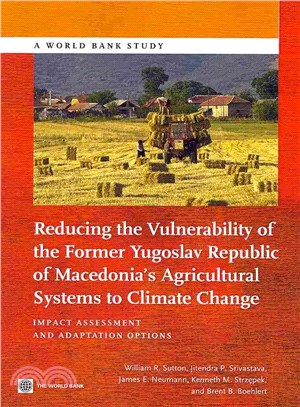
Agriculture is one of the most climate-sensitive of all economic sectors. In many countries, such as in FYR Macedonia, the risks of climate change are an immediate and fundamental problem because the
'Financial Management Information Systems and Open Budget Data: Do governments report on where the money goes?' is a World Bank Study, initiated in 2012 after an extended stocktaking exercise, to expl
Reliable evidence on the results of investments at the community level is in short supply. While communities have played a large role in the HIV/AIDS response, their contributions and innovative appro
This book was produced to support the policy dialogue on Human Resources for Health (HRH) in Ghana. Despite some recent successes, further improvements in health outcomes are in part hampered by the l
Toward Gender Equality in East Asia and the Pacific examines the relationship between gender equality and development and outlines an agenda for public action to promote more effective and inclusive d
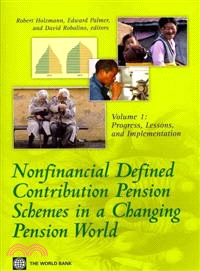
Nonfinancial Defined Contribution (NDC) schemes are now in their teens. The new pension concept was born in the early 1990s, implemented from the mid-1990s in Italy, Latvia, Poland and Sweden, legisl
Economists have long sought to predict how macroeconomic shocks willaffect individual welfare. Macroeconomic data and forecasts are easilyavailable when crises strike. But policy action requires not o
The earliest decisions that lead to development projects are among the most critical in determining long-term success. This phase of project development transforms exciting ideas into project proposa
Since 1984, the World Bank has financed 87 Financial Management Information System (FMIS) projects in 51 countries totaling over US $2.2 billion, of which US $938 million was for FMIS related informat
Geographical differences in living standards are a pressing concern for policy makers in the Middle East and North Africa (MENA) region. Production is most efficient when concentrated in leading area
The study focuses on three fundamental questions: how to protect the most vulnerable without promoting informality and dampening incentives to work and save; how to ensure that scarce public resource
The Nam Theun 2 (NT2) dam project in the Lao People's Democratic Republic marked the return of international financiers to the business of funding large-scale hydropower in an untested country settin
Diversity in Career Preferences of Future Health Workers in Rwanda is part of the World Bank Working Paper series. These papers are published to communicate the results of the Bank's ongoing research
This report reviews World Bank support to Egypt from fiscal 1999 through fiscal 2007. It analyzes the objectives and content of the Bank’s assistance program during this period. The Bank’s assistance
This World Bank publication contains the most detailed collection of data on Africa available in a single volume, with 450-plus macroeconomic, sectoral, and social indicators, covering 53 African coun
All countries in the former transition economies of Central, Eastern, and Southern Europe have undertaken public pension reforms of varying depth and orientation, often with the support of the World B
'The Malaysia-Indonesia Remittance Corridor' finds that Indonesian migrants to Malaysia are showing an increasingly clear preference for informal transfer mechanisms compared to their counterparts in
The World Bank finances about US$720 million in training every year, through both its lending projects and its in-house World Bank Institute (WBI). The evaluation found that while most of the training
Writing for policymakers in developing countries, Kuznetsov (a senior economist with the World Bank's Knowledge for Development Program) and his contributors explore the possible contributions of dias
In surveys, the way the question is worded has been shown to influence the results in either direction up to 30 percent. Master practitioner Iarossi describes the problems or biases in different data
The Democratic Republic of Congo has the third largest urban population in sub-Saharan Africa (estimated at 43% in 2016) after South Africa and Nigeria. It is expected to grow at a rate of 4.1% per ye
The electricity sector in the Middle East and North Africa (MENA) is in the grip of an apparent paradox. The region holds the world’s largest oil and gas reserves and has been able to universalize acc
The unanticipated spike in international food prices in 2007-08 hit many developing countries hard. International prices for food and other agricultural products increased by more than 100 percent bet
Health and economic development are interconnected. Over the past decades, the health sector has become an increasingly important component of the global economy, evidenced by the growing trend of hea
This applied study addresses the large flood exposures of Central Europe and proposes efficient financial and risk transfer mechanisms to mitigate fiscal losses from such natural catastrophes. In 201
This report is a pilot cross-country study that summarizes 10 years (1998-2008) of the World Bank’s engagement at the state level in selected large federal countries and combines elements of a country
This paper describes the characteristics of public investment management (PIM) in seven EU countries as it applies to a single sector—transport infrastructure. The report highlights some of the common
Governments are challenged to make an innovation-friendly climate while simultaneously ensuring that business development remain sustainable. Criminal use of the technology—terrorist financing and mon
Water in the Middle East and North Africa region is a source of major social and economic problems stemming from scarcity, variability, unreliable services, and environmental damage. The situation is
The past decade has brought an increasing recognition to the importance of pension systems to the economic stability of nations and the security of their aging populations. During this time, the World
"Books, Buildings, and Learning Outcomes examines the impact of World Bank-supported educational reforms introduced in Ghana since 1986 and related investment projects in support of basic education. A
'Public Health in the Middle East and North Africa' documents the main highlights and findings from the Middle East Regional Symposium, Meeting the Public Health Challenges of the 21st Century in the
Properly used tax expenditures can play an important role in implementing countries' economic and social policies. But they often go unnoticed because they take many forms of revenue forgone, from tax
Over 60 million people are currently displaced due to conflict or violence, and about 140 million are exposed to natural disasters. As part of humanitarian responses to those affected populations, gro
This World Bank report is a rich compilation of information on teaching learning materials (TLM) in Africa based on the extensive and multi-faceted experience of the author's work in the education sec
This book is about global public goods (GPGs), particularly those related to the environment, in the context of the global development process. We, the co-editors of this volume, are concerned with th
The weak economic performance and insufficient and low-quality job creation in Tunisia is primarily the result of an economic environment permeated by distortions, barriers to competition, and excessi
Biochar is the carbon-rich organic matter that remains after heating biomass under minimization of oxygen during a process called pyrolysis. Its relevance to deforestation, agricultural resilience, an
What caused the global financial crisis? How can the world economy recover? Should developing countries alter their growth strategies? What is the ideal role of the state? Updated papers from a June 2