Economic growth rates in Sub-Saharan Africa have more than doubled in the past decade. This growth mainly stems from the rising prices of commodities and other natural resources. In order to sustain t
Burundi, situated in the heart of the Great Lakes Region, is one of the poorest nations in the world. Beset by coups d'etats, presidential assassinations and genocide, the country has been caught in a
Islamic finance is emerging as a rapidly growing part of the financial sector in the Islamic world and is not restricted to Islamic countries, but is spreading wherever there is a sizable Muslim commu
The World Bank Group is a vital source of financial and technical assistance to developing countries around the world. Its focus is on helping the poorest people in the poorest countries by using its
The World Bank Group is a vital source of financial and technical assistance to developing countries around the world. Its focus is on helping the poorest people in the poorest countries by using its
India's relatively low HIV prevalence rate often raises the question of whether it is in corporate sector interest to allocate resources to combat HIV and AIDS. The five case studies in this report fe
The countries of East Asia are now twice as rich as they were before the economic collapse of the late 1990s, and their relative economic strength is the result of sharply increased regional integrati
Written by 27 World Bank experts, this book draws on the Bank's unique global capabilities and experience to promote an understanding of key global issues that cannot be solved by any one nation alone
Over the last few decades the quality of many international water bodies has deteriorated, resulting in economic losses from declines in the fishing industry and in tourism, as well as a loss of biodi
At the beginning of the new century, it is clear that while individual social programs can improve people's welfare and reduce poverty, a more holistic approach is needed in order to lift more people
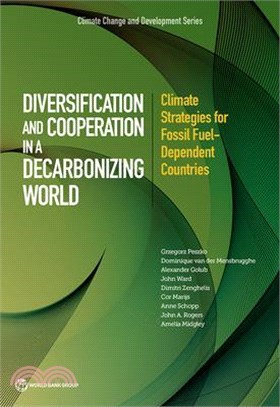
This is the first comprehensive stock-taking of what the global low-carbon transition may mean for fossil fuel-dependent countries (FFDCs) and how they can manage it. FFDCs are most exposed to the imp
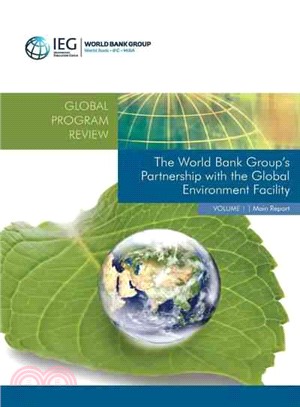
The World Bank Group was a principal founding partner of the Global Environment Facility (GEF) in its pilot phase in 1991, and of the restructured GEF in 1994. The Bank plays three different roles in
The economic and social prospects are daunting for the 89 million out-of-school youth who comprise nearly half of all youth in Sub-Saharan Africa. Within the next decade, when this cohort becomes the
Since the end of the Second World War, the international community has been focusing on reducing the number and the proportion of people who suffer from hunger. Over time it became clear that no singl
Sub-Saharan Africa has only 12 percent of the global population, yet this region accounts for 50 percent of child deaths, more than 60 percent of maternal deaths, 85 percent of malaria cases, and clos
This country assessment is part of a set of studies planned in order to provide a better understanding of how to improve the business environment in which the private sector operates in Congo and othe
Since the Rose Revolution at the end of 2003, Georgia has had singular success in fighting corruption in a variety of public services. This book is an attempt to chronicle these efforts and to distil
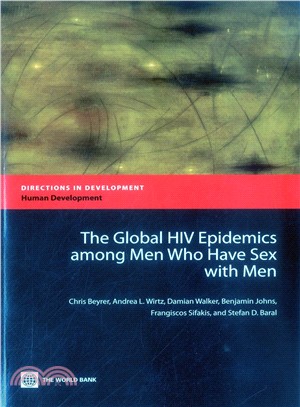
This report explores the emerging epidemics of HIV among men who have sex with men (MSM) in low and middle income countries (LMIC). A case study approach is used to explore these epidemics in detail
This study reviews trends in aid provided to the health sector in Somalia over 2000–2009. It is a testimony to the commitment of donors and implementers who have relentlessly tried to improve the dire
Since the private health sector is an important, and often dominant, provider of health services in Sub-Saharan Africa, it is the job of governments as the stewards of the health system to engage with
This book/CD-ROM report contains data tables of about 450 macroeconomic, sectoral, and social indicators in 53 African countries, with additional data on the CD-ROM. Data are given on areas such as na
The World Bank commitment to Social Protection and Labor (SP&L) activities began in earnest in the late 1980s with the first social funds to help communities cope with short-term adverse impacts o
A pocket edition of the Bank's World Development Indicators intended as a quick reference for users of the mother volume and its online versions. Tables list data for 800 indicators in the areas of pe
The most important asset people have is their human capital. For most, the value of this asset is realized in the labor market. This book examines the changing world of work in a dynamic region, and
While economic growth has been sustained for a number of years in many countries in the Middle East and North Africa (MENA) region, this has not resulted in the creation of an adequate number of jobs
Drawing on the findings from responses to a survey conducted in 2008–09 from 114 central banks worldwide (of which 33 are in Africa), this paper aims to better understand how central banks and other n
Sub-Saharan Africa is a critical development priority—it has some of the world's poorest countries and during the past two decades the number of poor in the region has doubled, to 300 million—more tha
This is a case study of the design of "e-Sri Lanka," a World Bank funded program that is supposed to help Sri Lanka develop its information and communication technology capacity in order to harness it
This book is both a study of Brazil's education policies of the past 15 years and a recommended roadmap for the coming decade. The authors note that education in Brazil is improving as a result of the
This study focuses on the local and regional impact of large-scale gold mining in Africa in the context of a mineral boom in the region since 2000. It contributes to filling a gap in the literature on
The Latin America and Caribbean (LAC) region is making progress in opening the doors of development to all. But it still has a long way to go. At the current pace, it would take, on average, a gener
'Armed conflict within a state weakens its social fabric and divides the population by undermining interpersonal and communal group trust, destroying the norms and values that underlie cooperation and
Project sustainability has received considerable attention in recent years. The increased awareness stems from a growing concern with social development issues such as poverty reduction, project susta
Re-mit-tance n. 1. The sending of money to someone at a distance. 2. The sum of money sent.New research shows the astonishing scope of remittances, with formally documented flows now estimated at US$9
Inequality and Economic Development in Brazil is part of the World Bank Country Study series. These reports are published with the approval of the subject government to communicate the results of the
The book describes the findings of a study to develop an open-access crop-climate impact modeling platform (Agroecological Zone Simulator - AZS) for the Latin American region and the use of the AZS pl
Violent conflict adds daunting challenges to social and economic analysis in poor countries: weak data, difficult access, fluid demographics, unsettled social patterns, insecurity, and political sensi