This up-to-date, comprehensive and consolidated guideline on essential intrapartum care brings together new and existing WHO recommendations that, when delivered as a package, will ensure good-quality
The recommendations in these guidelines provide overarching, evidence-based guidance on how risk communication should be practiced in an emergency. During public health emergencies, people need to kno
This report presents the recommendations of the thirty-ninth WHO Expert Committee on Drug Dependence (ECDD). The ECDD is responsible for the assessment of psychoactive substances for possible scheduli
The practice of health systems performance assessment (HSPA) varies across the WHO European Region. Consequently, there is a need for baseline information about HSPA across Member States. This review
This guideline provides global, evidence-informed recommendations on preventive chemotherapy, as a public health intervention in areas endemic for soil-transmitted helminths, to decrease the worm burd
Powerful demographic and economic forces are shaping health workforce needs and demands worldwide.Effectively addressing growing population need and economic demand for health workers stands as one of
Civil Society Organizations (CSOs) can make a vital contribution to public health and health systems, but harnessing their potential is complex in a Europe where government-CSO relations vary so profo
This volume contains monographs prepared at the eighty-second meeting of the Joint FAO/WHO Expert Committee on Food Additives (JECFA), which met in Geneva, Switzerland, from 7 to 16 June 2016. The tox
Skin cancer is the most common form of cancer among light-skinned populations. The chief environmental cause of skin cancer is ultraviolet radiation (UVR). UVR exposure comes mainly from the sun, but
The National Health Inequality Monitoring: A Step-by-Step Manual was designed to serve as a highly accessible, practical reference for the practice of health inequality monitoring. Organized according
This report presents the recommendations of the 38th WHO Expert Committee on Drug Dependence (ECDD). The ECDD is responsible for the assessment of psychoactive substances for possible scheduling under
This report represents the conclusions of a Joint FAO/WHO Expert Committee convened to evaluate the safety of various contaminants or groups of contaminants in food. The first part of the report conta
This document is intended for use by national immunization program managers and immunization partners involved in providing implementation support to countries.The specific objectives of this guide ar
This handbook was designed to provide up-to-date and practical guidance on national health planning and strategizing for health. It establishes a set of best practices to support strategic plans for h
This third global survey of the WHO Global Observatory for eHealth (GOe) investigates how eHealth can support universal health coverage (UHC) in Member States. A total of 125 countries participated in
Variations in definitions used for "migrant" and for different groups of migrants in different areas can affect health systems' policies and migrants' access to health care. This systematic review exp
One of the challenges in the development of global risk assessments for halophilic Vibrio spp. has been the availability of appropriate datasets from around the world which could be considered to be r
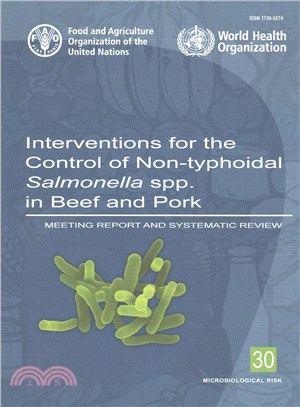
Non-typhoidal Salmonella spp. (hereafter simply referred to as Salmonella) is estimated to cause 93.8 million cases of acute gastroenteritis and 155,000 deaths globally each year, approximately 85% of
This third edition contains the text of the IHR (2005), the text of World Health Assembly resolution WHA58.3, the revised amended version of Annex 7 (concerning period of effectiveness of vaccination
If public resources were unlimited, there would be no gaps in health coverage and no real need for VHI. However, most health systems face fiscal constraints and VHI is often seen as a way to address t
This volume contains monographs prepared at the eighty-first meeting of the Joint FAO/WHO Expert Committee on Food Additives (JECFA), which met in Rome, Italy, from 17 to 26 November 2015.The toxicolo
This toolkit for integrated vector management (IVM) is designed to help national and regional program managers coordinate across sectors to design and run large IVM programs. It is an extension of ear
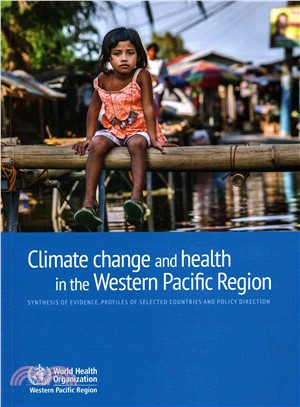
There is serious concern about the impact of the changing climate. The WHO Regional Office for the Western Pacific has taken the initiative in addressing health issues related to climate change, but f
This volume contains monographs prepared at the eightieth meeting of the Joint FAO/WHO Expert Committee on Food Additives (JECFA), which met in Rome, Italy, from 16 to 25 June 2015.The toxicological a
The third global survey on eHealth conducted by the WHO Global Observatory for eHealth (GOe)1 has a special focus--the use of eHealth in support of universal health coverage. eHealth plays a vital rol
This book is the latest addition to a series of reports on young people's health from the Health Behaviour in School-aged Children (HBSC) study: a WHO collaborative cross-national study that has provi
The first version of the WHO Malaria Microscopy Quality Assurance Manual (2009) was based on recommendations made at a series of informal consultations organized by WHO, particularly a bi-regional mee
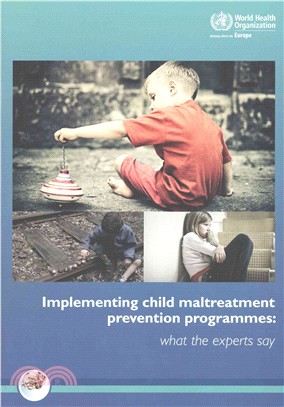
Child maltreatment can result in not only immediate physical and mental harm to children but also long-term consequences throughout their lives. Measurably reducing child maltreatment requires action
The inappropriate use of antibiotics is a primary cause of the ongoing increase in drug resistance among pathogenic bacteria. The resulting decrease in the efficacy of antibiotics threatens our abilit
The inappropriate use of antibiotics is a primary cause of the ongoing increase in drug resistance among pathogenic bacteria. The resulting decrease in the efficacy of antibiotics threatens our abilit
This 48th edition, including amendments adopted up to 31 December 2014, brings together into one volume essential documents concerning the governance of the World Health Organization, including the Co
The WHO Expert Committee on Drug Dependence (ECDD) is responsible for assessing psychoactive substances for possible control under the international drug control conventions. The ECDD reviews the ther
Cannabis is globally the most commonly used psychoactive substance under international control. In 2013, an estimated 181.8 million people aged 15-64 years used cannabis for nonmedical purposes global
This WHO Global report on psoriasis brings the public health impact of psoriasis into focus. The report is written to help raise awareness of the range of ways that psoriasis can affect peoples' lives
The World Health Organization (WHO) Expert Committee on Specifications for Pharmaceutical Preparations advises the Director-General of WHO in the area of medicines quality assurance. It provides indep
Comprehensive public health action on population ageing is urgently needed. This will require fundamental shifts, not just in the things we do, but in how we think about ageing itself. TheWorld Report
The First Supplement adds to and updates the fourth edition of The International Pharmacopoeia. With publication of this Supplement the fourth edition ofThe International Pharmacopoeia now comprises t
This publication takes stock of ongoing work relating to childhood lead exposure with a view to consolidating and disseminating scientific knowledge and experience as two important elements in the pro
This plan has been developed within the context of the new global Stop TB strategy. It provides a road map with strategies clearly laid out for achieving the 2010 goal. The plan will guide countries a
This second volume in this series of guidelines for safe recreational water environments provides an authoritative referenced review and assessment of the health hazards associated with recreational w