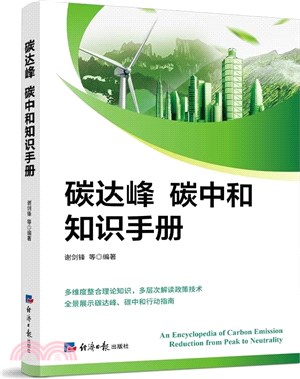
2020年9月中國明確提出2030年“碳達峰”與2060年“碳中和”目標,要實現這一目標必須重視一些具有戰略意義的技術。碳捕獲、利用與封存(Carbon Capture,Utilization and Storage,簡稱CCUS)技術,是指把生產過程中排放的二氧化碳進行提純,繼而投入到新的生產過程中,可以循環再利用,而不是簡單地封存。CCUS技術可以將二氧化碳資源化,能產生良好的經濟效益,更具有現實操作性。本書從為什麼要碳中和、怎樣碳中和、CCUS發展過程、碳捕集技術、二氧化碳輸送技術、二氧化碳封存技術、二氧化碳利用技術、CCUS商業價值分析等方面開展論述,為讀者展示實現碳中和的重要技術手段CCUS的技術全貌和商業價值。
《能源電力企業碳中和技術與管理》主要介紹了能源電力行業碳中和的背景與意義, 闡述了能源電力企業實現碳中和的戰略與路徑、我國能源電力企業發電技術的現狀、碳中和帶來的挑戰與機遇以及低碳技術轉型的方向。書中進一步探討了傳統節能減排技術、可再生能源發電技術、核能發電供熱一體化技術、儲能技術、氫能供應鏈及氫能利用等內容,闡明了能源電力企業的發電體系,解釋了新型電力系統、能源互聯網、“源-網-荷-儲” 運營模式等新興概念。最後,本書還對能源電力企業碳中和技術未來的發展進行了展望,介紹了實現淨零排放的關鍵技術,如碳捕集、利用與封存(CCUS)技術, 數字技術的發展及生命週期分析方法等。本書可作為高等院校新能源、電力工程等相關專業的教材使用,還可為企業提供具體的節能減排建議,作為能源電力行業極具價值的培訓教材。Carbon Neutrality Technology and Management of Energy and Power Enterprises delves into the background and significance of carbon neutrality within the energy and power sector. It outlines strategies and pathways for energy and power enterprises to achieve carbon neutrality,examining the current state of power generation technology in China,detailing the challenges and opportuni- ties presented by carbon neutrality,and exploring the direction of low-carbon technological transi- tions. The book further explores conventional energy conservation and emission reduction technol- ogies,renewable energy power generation,integrated nuclear power ge