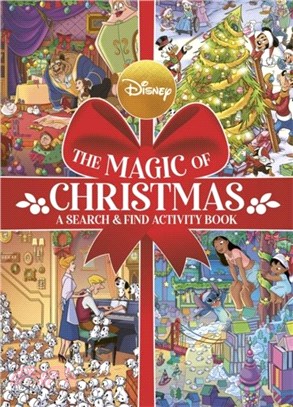
Celebrate the magic of Christmas with your favourite Disney characters!Join a host of Disney characters as you search for festive objects, making your way through magical kingdoms covered in snow and decorated for the holidays. With twelve scenes featuring favourite characters such as Lilo and Stitch, Belle, Cinderella, Mickey and Friends, Woody and Buzz and Mike and Sully, this fun-filled search and find book is perfect for sharing with the whole family this Christmas. Look out for festive objects including Christmas wreaths, lanterns, ornaments, gifts and more!Films included: 101 Dalmatians, Big Hero Six, Lilo & Stitch, Beauty and the Beast, Cinderella, The Little Mermaid, The Princess and the Frog, Sleeping Beauty, Snow White, Tangled, Mickey and Friends, The Incredibles, Toy Story and Monsters Inc.Also available: Where's Mickey?, Where's Minnie?, Where's Olaf?, Where's Bruno?, Where's Spidey?, Where's Spidey 2?, Where's Grogu?, Where's the Wookie?, Disney Princess Magical Words