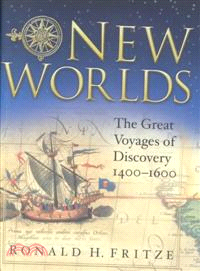
In the three decades between 1492 and 1522, European merchants and explorers progressed from relative ignorance about the shape of the globe to knowledge of an atlas that was almost complete. They did
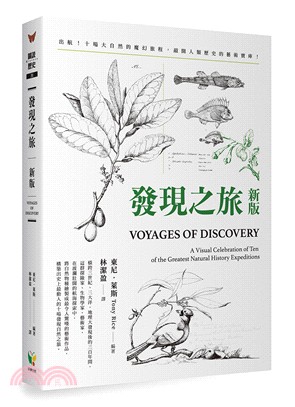
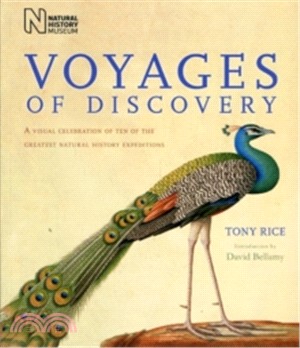
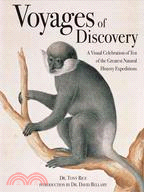
From the unrivalled collections of the Library of the Natural History Museum come astonishing images of the natural world spanning three centuries of global exploration. This rare collection chronicle
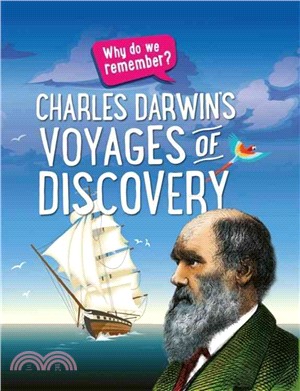
Find out why we remember the great naturalist Charles Darwin and his epic voyages of discovery, and learn how he proposed the theory of evolution, which changed science forever. A simple, friendly fir
Between 1768 and 1779, Captain James Cook of the British Royal Navy made three voyages of exploration for purposes of scientific research. On each voyage he kept a log of scenes and adventures. Cook's
Synthesizes the major issues in island archaeological research including human impacts on island ecosystems, island colonization, exchange systems, and theoretical and methodological concerns.
The huge expansion in trade and the acquisition of vast empires that characterize this period of European history would set the pattern for at least the next two centuries. Fritze begins with a portra
Alexander (formerly a professor of history, philosophy, and history of science at Stanford U. and U. of California at Los Angeles) contends that the mathematical pioneers of the study of infinitesimal
Superb artwork from London's Natural History Museum spanning 3 centuries document the achievements of 10 major natural history expeditions and bring to life the fascinating stories behind them.
For centuries before the arrival in Australia of Captain Cook and the so-called First Fleet in 1788, intrepid seafaring explorers had been searching, with varied results, for the fabled “Great Southla
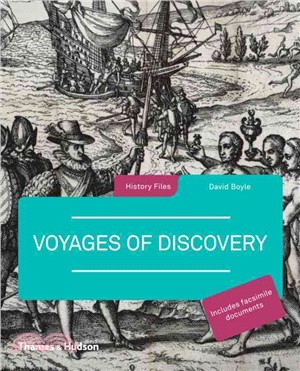
Voyages of Discovery is the story of the last great age of European sea exploration, when state-supported expeditions driven by both scientific and political motives set out to map the remaining unkno




![Cook's Voyages of Discovery [microform]](https://cdnec.sanmin.com.tw/product_images/101/101518674.jpg)








![Voyages of Discovery in the Arctic and Antarctic Seas, and Round the World. to Which Are Added an Autobiography [&c.]](https://cdnec.sanmin.com.tw/product_images/101/101714758.jpg)
![Voyages of Discovery in the Arctic and Antarctic Seas, and Round the World. to Which Are Added an Autobiography [&c.]](https://cdnec.sanmin.com.tw/product_images/101/101714301.jpg)