Plotinus’ Ennead V.8, originally part of a single work (with III.8, V.5, and II.9), provides the foundation for a positive view of the universe as an image of divine beauty against the Gnostic r
Ennead VI.8 gives us access to the living mind of a long dead sage as he tries to answer some of the most fundamental questions we in the modern world continue to ask: are we really free when most of
Ennead I.1 is a succinct and concentrated analysis of key themes in Plotinus' psychology and ethics. It focuses on the soul-body relation, discussing various Platonic, Aristotelian, and Stoic view
How was the universe created, and what is our place within it? These are the questions at the heart of Plotinus’ Against the Gnostics. For the Gnostics, the universe came into being as a result of the
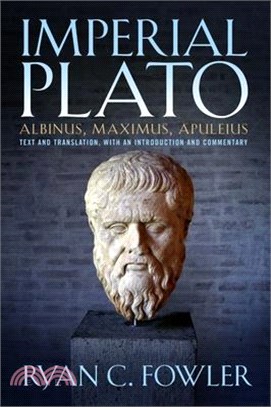
Imperial Plato presents new translations of three introductions to Plato’s thought from the second half of the second century CE: the Introduction to Plato by Albinus of Smyrna, Dissertation 11 of Max
Ennead IV.7 is a very early treatise (second according to Porphyry’s chronological table), and unlike the many treatises devoted to attempts at untangling various issues Plotinus found problemati
"Ennead I.6 is probably the best known and most influential treatise of Plotinus, especially for Renaissance artists and thinkers. Although the title may suggest a work on aesthetics and thus of
Plotinus' Treatise V.1 comes closer than any other to providing an outline of his entire spiritual and metaphysical system, and as such it may serve to some degree as an introduction to his p
The term dunamis (potentiality) entered into the philosophical vocabulary with Plato, but it was with Aristotle that it acquired, together with energeia (actuality), the strong technical meaning that
Ennead IV.4.30–45 and IV.5 retrieves the unity in this last section of Plotinus’ treatise on Problems concerning the Soul. Combining translation with commentary, Gurtler enhances both the accuracy of
For Plotinus, the nature and status of the human soul is one of the central problems of philosophy.Ennead IV.3-–4.29 constitutes his most penetrating enquiry into this topic, addressing the issues of
Ennead VI.4-5, originally written as a single treatise, contains Plotinus’ most general and sustained exposition of the relationship between the intelligible and the sensible realms, addressing and co
In Aristotle’s Empiricism, Jean De Groot argues that an important part of Aristotle’s natural philosophy has remained largely unexplored and shows that much of Aristotle’s analysis of natural movement
This collection of Poems—offered as a dual-language English–Romanian edition—together with a critical Expose by the translators, a Preface by the author, a Chronicle and Biography, conveys to the read
"A translation of Plotinus' Enneads V.5: "That the Intelligibles are not External to the Intellect, and on the Good," with an introduction and philosophical commentary. Platonists beginning in the Old
This celebratory Festschrift dedicated to Charles Kahn comprises some 23 articles by friends, former students and colleagues, many of whom first presented their papers at the international "Presocrati
The?Statesman?is a difficult and puzzling Platonic dialogue. In?A Stranger's Knowledge?Marquez argues that Plato abandons here the classic idea, prominent in the?Republic, that the philosopher,?qua?ph
?Plotinus was much exercised by Plato's doctrines of the soul.?In this treatise, at chapter 1 line 27, he talks of "the divine Plato, who has said in many places in his works many noble things about t
This volume presents the results of the ESAP-HYELE conference on "Aristotle, Physics 7.3: What is Alteration?", which took place in Vitznau, Switzerland, 12–15 February 2007. The contributors are part
Scholars of philosophy and classics consider the work of fifth-century BC Greek philosopher Parmenides, reconstructed during the 16th century from quotations and allusions written before the texts the
Plato’sParmenidespresents the modern reader with a puzzle. Noted for being the most difficult of Platonic dialogues, it is also one of the most influential. This translation is the
Plato’s Parmenides presents the modern reader with a puzzle. Noted for being the most difficult of Platonic dialogues, it is also one of the most influential. This translation is the
This collection of original essay together philosophers, classicists, physicists, and architects to reveal the meaning and assess the impact of one of the most profound and influential works of weste
?Edited with New Translation by Richard McKirahan With a New Preface by Malcolm Schofield This book is a revised and expanded version of A.H. Coxon's full critical edition?of the extant remains of Par
Platonic Patternsis a reprint collection of many of Holger Thesleff's studies in Plato—spanning from 1967 to 2003. It includes three books, four articles and a new introduction by t
Halper (philosophy, U. of Georgia) began his projected three-volume analysis in 1989 with the central books of Metaphysics, then ran into textual and conceptual problems so that this second volume, on
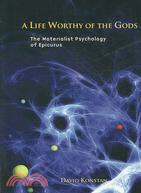
Konstan (classics and the humanistic tradition and comparative literature, Brown U.) inquires into Athenian philosopher Epicurus' (341-270 BC) analysis of irrational fears and desires, arguing that su
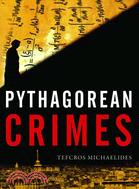
Athens, 1929. Stefanos Kantartzis is found murdered, and Michael Igerinos, his best friend of 30 years, is being questioned by the police as the last person to see him alive.While looking at hi
Athens, 1929. Stefanos Kantartzis is found murdered, and Michael Igerinos, his best friend of 30 years, is being questioned by the police as the last person to see him alive. While looking
A secret concealed for centuries, shrouded in myth, silenced by stone. A secret that if unleashed threatens to shake the very foundation of Western civilization. A secret that can remain hidden no
A secret concealed for centuries, shrouded in myth, silenced by stone. A secret that if unleashed threatens to shake the very foundation of Western civilization. A secret that can remain hidden no
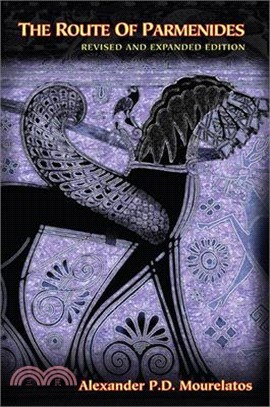
Mourelatos’ study of the fragments of Parmenides’ poem combines traditional philological reconstruction with the approaches of literary criticism and philosophical analysis in order to reveal the thou