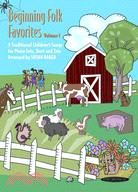
Beginning Folk Favorites, Volume 1 includes songs most children already know, but will now be able to play. They are pitched in keys suitable for singing and use keys and patterns presented in Suzuki
This interactive, practical book for teachers not only contains creative ideas for group classes, but also includes mental energizers, room for notes, and brainstorming concepts for planning personal
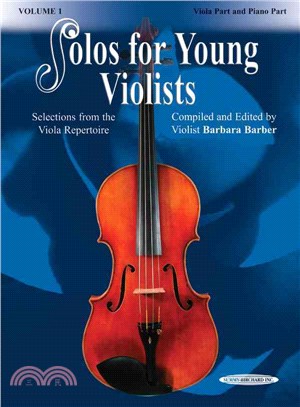
Solos for Young Violists is a five-volume series of music books with companion compact discs featuring 34 works for viola and piano. Many of the pieces in this collection have long been recognized as
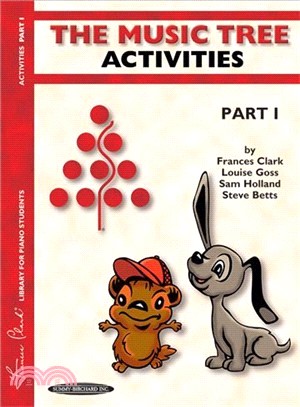
The Activities books are closely correlated, unit-by-unit with the Music Tree series. They provide extensive reinforcement in all the new Music Tree discoveries, plus they offer an exciting new progra
Here is the perfect tool to get students to practice more frequently. Now available are piano accompaniment MIDI disks for the Suzuki Violin School Volumes 1-6. Recorded by Suzuki Accompanist Linda P
Scales Plus! is the first all-inclusive study of scales, keys, intonation, positions, and shifts in one volume. It is designed for A"nearlyA" beginners to advanced students. Teachers will be delighted
This series contains all of the pieces from Volumes 1 and 2 of the Suzuki Violin School arranged for three violins. Suzuki Violin Volume 1 serves as the violin 1 part. The pieces can be played with o
This series contains all of the pieces from Volumes 1 and 2 of the Suzuki Violin School arranged for three violins. Suzuki Violin Volume 1 serves as the violin 1 part. The pieces can be played with o
An exciting new collection of keyboard gems from 18th, 19th, and 20th centuries, designed as a companion volume for Music Tree 3. The pieces are by the great masters from each period who wrote music
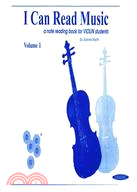
These easy-to-read, progressive exercises by Joanne Martin develop a student's reading skills one stage at a time, with many repetitions at each stage. I Can Read Music is designed as a first note-re
Author Susan Bauman explores aspects of cultural consciousness in Japan, including the system of values and obligations in Japanese society, in an attempt to clarify the misunderstandings and misrepr
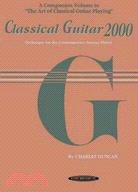
A companion volume to The Art of Classical Guitar Playing. This book provides serious students of the classical guitar with enough exercise material to progress to the highest levels of competence.
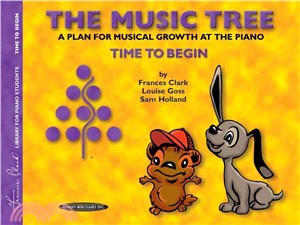
Time To Begin, the cornerstone of the Music Tree series, is a unique and highly effective approach to beginning piano instruction. Starting with off-staff notation, it leads the student to reading di
The Music Tree series continues the development of complete musicianship by providing the beginner with delightful and varied repertoire. The pupil learns a variety of idioms encompassing folk, jazz
The Activities books are closely correlated, unit-by-unit with the Music Tree series. They provide extensive reinforcement in all the new Music Tree discoveries, plus they offer an exciting new progr
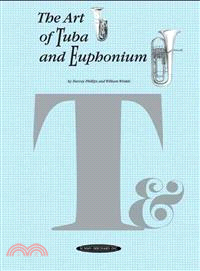
This book serves the need for an authoritative guide to the euphonium and tuba for students, teachers, and professional performers. The content and presentation as applied to the wind instruments are
These easy-to-read, progressive exercises by Joanne Martin develop a student's reading skills one stage at a time, with many repetitions at each stage. I Can Read Music is designed as a first note-re
Translated from the French by Florence W. Seder, Dimitry Markevitch concludes his preface, or Prelude as he calls it: "History, fact and personal anecdote blend here to provide a complete story of th
The author's stated purpose in writing The Art of Cello Playing is 'to present a progressive sequence of commentary and material as a basis for acquiring a sound technical foundation and basic playin
Not a "method" in the traditional sense, this book explains what happens in the finest classical guitar playing and what in turn the student can do to mold his or her playing to that ideal.
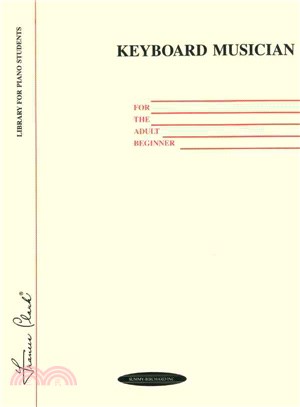
Here is a complete repertoire and textbook for the older or adult beginner. Starting with material appropriate for the first lesson, it moves rapidly through discoveries, music and activities equival
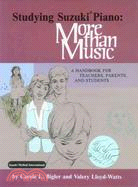
A comprehensive coverage of what the Suzuki approach embodies, this book should be considered a requirement in the home of every piano teacher and student. Eight of the 14 chapters lay the foundation
Structure and Style, first published in 1962 and expanded in 1979, fills the need for new ways of analysis that put 20th-century music in perspective. It spans forms in use before 1600 through forms a
Contents are: Sonata in G Minor (Grave, Courante: Allegro con Spirito, Adagio, Vivace) (H. Eccles) * Tambourin (A.E. GrActry) * Largo arranged from Sonata III in C Major for Solo Violin, BWV 1005 (J.
Fine bassoon teachers are a rarity in all but cities with major symphony orchestras and/or a university with a distinguished music department faculty. William Spencer took up the challenge of providi
So many of the great pianists and teachers have come out of Poland and Russia (Rubinstein, Anton as well as Arthur, Leschetizky, Paderewski, the Lhevinnes, Gilels, Richter, and others), yet we know l
According to Larry Teal, the best method of learning to play the saxophone is to study with a competent teacher. Teal's studies were mostly of instruments other than the saxophone, but as a student a
Edward Kleinhammer, author of The Art of Trombone Playing, joined the Civic Orchestra, the training orchestra for the Chicago Symphony, in 1940. After two years he was accepted by the Chicago Symphon
Keith Stein was already a phenomenal clarinetist when he attended the very first session of the National Music Camp at Interlochen, Michigan. Stein was then accepted into the Chicago Symphony, and be
First to be published in the series was The Art of French Horn Playing by Philip Farkas, now Distinguished Professor Emeritus of Music at Indiana University. In 1956, when Summy-Birchard published Fa