




滿額折
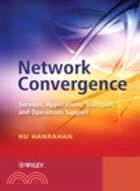
Network Convergence - Services, Applications, Transport, And Operations Support
商品資訊
ISBN13:9780470024416
出版社:John Wiley & Sons Inc
作者:Hanrahan
出版日:2007/02/23
裝訂/頁數:平裝/464頁
定價
:NT$ 5888 元優惠價
:
90 折 5299 元
若需訂購本書,請電洽客服 02-25006600[分機130、131]。
商品簡介
作者簡介
目次
商品簡介
The present information age is enabled by telecommunications and information technology and the continued convergence of their services, technologies and business models. Within telecommunications, the historic separations between fixed networks, mobile telephone networks and data communications are diminishing. Similarly, information technology and enterprise communications show convergence with telecommunications. These synergies are captured in the concept of Next Generation Networks that result from evolution to new technologies, enabling new services and applications.
Network Convergence creates a framework to aid the understanding of Next Generation Networks, their potential for supporting new and enhanced applications and their relationships with legacy networks. The book identifies and explains the concepts and principles underlying standards for networks, services and applications.
Network Convergence:
Gives comprehensive coverage of packet multimedia, enterprise networks, third generation mobile communications, OSA/Parlay and developments in fixed networks.
Gives an integrated view of diverse information and communications systems and technology through a common NGN Framework.
Delves into protocols, APIs and software processes for supporting services and applications in advanced networks.
Discusses a variety of applications of telecommunications supporting IT and IT enhanced by communications.
Follows developments in operations support systems standards and links these to next generation networks.
Includes a wealth of examples, use cases, tables and illustrations that help reinforce the material for students and practitioners.
Features an accompanying website with PowerPoint presentations, glossary, web references, tutorial problems, and 'learn more' pages.
This essential reference guide will prove invaluable to advanced undergraduate and graduate students, academics and researchers. It will also be of interest to professionals working for telecommunications network operators, equipment vendors, telecoms regulators, and engineers who wish to further their knowledge of next generation networks.
Network Convergence creates a framework to aid the understanding of Next Generation Networks, their potential for supporting new and enhanced applications and their relationships with legacy networks. The book identifies and explains the concepts and principles underlying standards for networks, services and applications.
Network Convergence:
Gives comprehensive coverage of packet multimedia, enterprise networks, third generation mobile communications, OSA/Parlay and developments in fixed networks.
Gives an integrated view of diverse information and communications systems and technology through a common NGN Framework.
Delves into protocols, APIs and software processes for supporting services and applications in advanced networks.
Discusses a variety of applications of telecommunications supporting IT and IT enhanced by communications.
Follows developments in operations support systems standards and links these to next generation networks.
Includes a wealth of examples, use cases, tables and illustrations that help reinforce the material for students and practitioners.
Features an accompanying website with PowerPoint presentations, glossary, web references, tutorial problems, and 'learn more' pages.
This essential reference guide will prove invaluable to advanced undergraduate and graduate students, academics and researchers. It will also be of interest to professionals working for telecommunications network operators, equipment vendors, telecoms regulators, and engineers who wish to further their knowledge of next generation networks.
作者簡介
Hu Hanrahan is Professor of Communications Engineering and Director of the Centre for Telecommunications Access and Services at the University of the Witswatersrand. He is a graduate of the University of the Witswatersrand, from where he also received his Doctorate. He has extensive experience of teaching in the subject area and is also active as consultant for a large number of companies and public utilities. His academic publication record is extensive over many aspects of communications technology.
目次
Preface.
Acknowledgments.
Conventions.
Companion Website.
Abbreviations.
Principal Graphic Symbols.
1 Setting the Context for Evolution and Convergence of Networks.
1.1 Historical Background to Present Networks.
1.2 Defining Present State Using Reference Models.
1.3 Evolution and Convergence.
1.4 The Next GenerationNetwork Concept.
1.5 Conclusion.
2 A Framework for Examining Next Generation Networks.
2.1 Characteristics of Evolving Networks.
2.2 Dealing with Complexity.
2.3 Framework for EvolvingNetworks.
2.4 Examples of Application of Framework.
2.5 Conclusion.
3 Software Methodologies for Converged Networks and Services.
3.1 Development of Software Methodologies for ICT.
3.2 Software Processes in the NGN Framework.
3.3 High-level Analysis and DesignMethods.
3.4 Enterprise and Business Modelling Notation.
3.5 Object and Data Definition Languages.
3.6 Dynamic Modelling Notations.
3.7 Component and Interface Notations.
3.8 Distributed Systems.
3.9 Creating a Unified Framework.
4 An NGN: the Managed Voice over IP Network.
4.1 Development of Packet Multimedia Standards.
4.2 Requirements on a Managed Voice Network.
4.3 Properties of Packetised Voice.
4.4 General Concepts of Multimedia Communications.
4.5 Signalling Plane for Packet Multimedia.
4.6 The H.323 Suite.
4.7 Media Gateway Functions and Control.
4.8 Multimedia Communications Based on SIP.
4.9 Supplementary Services in Packet Telephony.
4.10 ITU-T Evolutionary Protocols: BICC.
4.11 Voice on the Internet.
4.12 Conclusion.
5 Integrated Enterprise ICT Systems.
5.1 Drivers and Requirements.
5.2 Contributions to Convergence.
5.3 Network Level Convergence.
5.4 Application and Service Level Convergence.
5.5 Conclusions.
6 Legacies and Lessons: Broadband ISDN, TINA and TIPHON.
6.1 Learning from History.
6.2 The Broadband ISDN.
6.3 TINA Architecture.
6.4 Business Model and Reference Points.
6.5 TINA Service Architecture.
6.6 Network Resource Architecture.
6.7 Lessons from TINA for NGNs.
6.8 TIPHON.
6.9 Conclusion.
7 Important NGNs: Third Generation Mobile Communication Systems.
7.1 Architectural Concepts.
7.2 Mobile Communication System Evolution.
7.3 Services in the CS Domain.
7.4 Packet-switched Domain: GPRS-based Systems.
7.5 IP Multimedia Subsystem.
7.6 Conclusion.
8 Opening the Network using Application Programming Interfaces.
8.1 Closed Network Evolution.
8.2 Opening the Network.
8.3 The OSA/Parlay Architecture.
8.4 Framework Interfaces and Use Cases.
8.5 The OSA/Parlay Gateway.
8.6 Communication-orientatedUse Cases.
8.7 ParlayXWeb Services.
8.8 OSA/Parlay API Implementation Issues.
8.9 Other Approaches to Open Networks.
8.10 Conclusion.
9 Operations Support Systems.
9.1 Relationship of OSS/BSS to ICT Systems.
9.2 Evolution of OSS/BSS.
9.3 The Telecommunications Operations Map.
9.4 Enhancement of the TOM: eTOM.
9.5 New Generation OSS.
9.6 Conclusion.
10 Migration from Legacy to Next Generation Networks.
10.1 Retrospect.
10.2 Reflecting on Evolution and Convergence.
10.3 TechnologyMigration.
10.4 Is There a Target NGN?
10.5 Managing Complexity: Avoiding Pitfalls.
10.6 A Last Word.
Glossary.
References
Index.
Acknowledgments.
Conventions.
Companion Website.
Abbreviations.
Principal Graphic Symbols.
1 Setting the Context for Evolution and Convergence of Networks.
1.1 Historical Background to Present Networks.
1.2 Defining Present State Using Reference Models.
1.3 Evolution and Convergence.
1.4 The Next GenerationNetwork Concept.
1.5 Conclusion.
2 A Framework for Examining Next Generation Networks.
2.1 Characteristics of Evolving Networks.
2.2 Dealing with Complexity.
2.3 Framework for EvolvingNetworks.
2.4 Examples of Application of Framework.
2.5 Conclusion.
3 Software Methodologies for Converged Networks and Services.
3.1 Development of Software Methodologies for ICT.
3.2 Software Processes in the NGN Framework.
3.3 High-level Analysis and DesignMethods.
3.4 Enterprise and Business Modelling Notation.
3.5 Object and Data Definition Languages.
3.6 Dynamic Modelling Notations.
3.7 Component and Interface Notations.
3.8 Distributed Systems.
3.9 Creating a Unified Framework.
4 An NGN: the Managed Voice over IP Network.
4.1 Development of Packet Multimedia Standards.
4.2 Requirements on a Managed Voice Network.
4.3 Properties of Packetised Voice.
4.4 General Concepts of Multimedia Communications.
4.5 Signalling Plane for Packet Multimedia.
4.6 The H.323 Suite.
4.7 Media Gateway Functions and Control.
4.8 Multimedia Communications Based on SIP.
4.9 Supplementary Services in Packet Telephony.
4.10 ITU-T Evolutionary Protocols: BICC.
4.11 Voice on the Internet.
4.12 Conclusion.
5 Integrated Enterprise ICT Systems.
5.1 Drivers and Requirements.
5.2 Contributions to Convergence.
5.3 Network Level Convergence.
5.4 Application and Service Level Convergence.
5.5 Conclusions.
6 Legacies and Lessons: Broadband ISDN, TINA and TIPHON.
6.1 Learning from History.
6.2 The Broadband ISDN.
6.3 TINA Architecture.
6.4 Business Model and Reference Points.
6.5 TINA Service Architecture.
6.6 Network Resource Architecture.
6.7 Lessons from TINA for NGNs.
6.8 TIPHON.
6.9 Conclusion.
7 Important NGNs: Third Generation Mobile Communication Systems.
7.1 Architectural Concepts.
7.2 Mobile Communication System Evolution.
7.3 Services in the CS Domain.
7.4 Packet-switched Domain: GPRS-based Systems.
7.5 IP Multimedia Subsystem.
7.6 Conclusion.
8 Opening the Network using Application Programming Interfaces.
8.1 Closed Network Evolution.
8.2 Opening the Network.
8.3 The OSA/Parlay Architecture.
8.4 Framework Interfaces and Use Cases.
8.5 The OSA/Parlay Gateway.
8.6 Communication-orientatedUse Cases.
8.7 ParlayXWeb Services.
8.8 OSA/Parlay API Implementation Issues.
8.9 Other Approaches to Open Networks.
8.10 Conclusion.
9 Operations Support Systems.
9.1 Relationship of OSS/BSS to ICT Systems.
9.2 Evolution of OSS/BSS.
9.3 The Telecommunications Operations Map.
9.4 Enhancement of the TOM: eTOM.
9.5 New Generation OSS.
9.6 Conclusion.
10 Migration from Legacy to Next Generation Networks.
10.1 Retrospect.
10.2 Reflecting on Evolution and Convergence.
10.3 TechnologyMigration.
10.4 Is There a Target NGN?
10.5 Managing Complexity: Avoiding Pitfalls.
10.6 A Last Word.
Glossary.
References
Index.









購物須知
外文書商品之書封,為出版社提供之樣本。實際出貨商品,以出版社所提供之現有版本為主。部份書籍,因出版社供應狀況特殊,匯率將依實際狀況做調整。
無庫存之商品,在您完成訂單程序之後,將以空運的方式為你下單調貨。為了縮短等待的時間,建議您將外文書與其他商品分開下單,以獲得最快的取貨速度,平均調貨時間為1~2個月。
為了保護您的權益,「三民網路書店」提供會員七日商品鑑賞期(收到商品為起始日)。
若要辦理退貨,請在商品鑑賞期內寄回,且商品必須是全新狀態與完整包裝(商品、附件、發票、隨貨贈品等)否則恕不接受退貨。