




滿額折
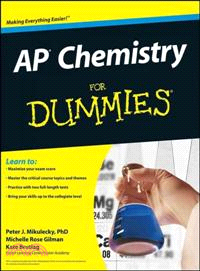
Ap Chemistry For Dummies
商品資訊
系列名:For Dummies (Math & Science)
ISBN13:9780470389768
出版社:John Wiley & Sons Inc
作者:Gilman
出版日:2008/11/21
裝訂/頁數:平裝/416頁
規格:27.3cm*21.0cm*2.5cm (高/寬/厚)
版次:1
商品簡介
作者簡介
目次
商品簡介
Gearing up for the AP Chemistry exam? AP Chemistry For Dummies is packed with all the resources and help you need to do your very best. This AP Chemistry study guide gives you winning test-taking tips, multiple-choice strategies, and topic guidelines, as well as great advice on optimizing your study time and hitting the top of your game on test day.
This user-friendly guide helps you prepare without perspiration by developing a pre-test plan, organizing your study time, and getting the most out or your AP course. You’ll get help understanding atomic structure and bonding, grasping atomic geometry, understanding how colliding particles produce states, and much more. Two full-length practice exams help you build your confidence, get comfortable with test formats, identify your strengths and weaknesses, and focus your studies. Discover how to
Create and follow a pretest plan
Understand everything you must know about the exam
Develop a multiple-choice strategy
Figure out displacement, combustion, and acid-base reactions
Get familiar with stoichiometry
Describe patterns and predict properties
Get a handle on organic chemistry nomenclature
Know your way around laboratory concepts, tasks, equipment, and safety
Analyze laboratory data
Use practice exams to maximize your score
AP Chemistry For Dummies gives you the support, confidence, and test-taking know-how you need to demonstrate your ability when it matters most.
This user-friendly guide helps you prepare without perspiration by developing a pre-test plan, organizing your study time, and getting the most out or your AP course. You’ll get help understanding atomic structure and bonding, grasping atomic geometry, understanding how colliding particles produce states, and much more. Two full-length practice exams help you build your confidence, get comfortable with test formats, identify your strengths and weaknesses, and focus your studies. Discover how to
Create and follow a pretest plan
Understand everything you must know about the exam
Develop a multiple-choice strategy
Figure out displacement, combustion, and acid-base reactions
Get familiar with stoichiometry
Describe patterns and predict properties
Get a handle on organic chemistry nomenclature
Know your way around laboratory concepts, tasks, equipment, and safety
Analyze laboratory data
Use practice exams to maximize your score
AP Chemistry For Dummies gives you the support, confidence, and test-taking know-how you need to demonstrate your ability when it matters most.
作者簡介
Peter J. Mikulecky, PhD and Kate Brutlag teach Math and Science at Fusion Learning Center/Fusion Academy in Solana Beach, CA.
Michelle Rose Gilman is the Founder of Fusion Learning Center. Members of this team have authored AP Biology For Dummies, ACT For Dummies, Pre-Calculus For Dummies, Chemistry Workbook For Dummies and GRE For Dummies.
Michelle Rose Gilman is the Founder of Fusion Learning Center. Members of this team have authored AP Biology For Dummies, ACT For Dummies, Pre-Calculus For Dummies, Chemistry Workbook For Dummies and GRE For Dummies.
目次
Introduction.
Part I: Thriving Inside the Test Tube: How to Prepare for the Exam.
Chapter 1: Knowing What You’re Up Against: The AP Chemistry Exam.
Chapter 2: Preparing Yourself for the Exam.
Part II: Building Matter from the Ground Up: Atoms and Bonding.
Chapter 3: Looking Under the Atomic Hood: Atomic Structure.
Chapter 4: Answering Questions about Atomic Structure.
Chapter 5: Working and Playing Together: Bonding.
Chapter 6: Answering Questions on Bonding.
Chapter 7: Doing Atomic Geometry: Molecular Shapes.
Chapter 8: Answering Questions on Molecular Shapes.
Part III: Colliding Particles to Produce States.
Chapter 9: Putting a Finger to the Wind: Gases.
Chapter 10: Answering Questions on Gases.
Chapter 11: Condensing Particles: Solids, Liquids, and Solutions.
Chapter 12: Answering Questions on Solids, Liquids, and Solutions.
Part IV: Transforming Matter in Reactions.
Chapter 13: Reacting by the Numbers: Reactions and Stoichiometry.
Chapter 14: Answering Questions on Reactions and Stoichiometry.
Chapter 15: Going Nowhere: Equilibrium.
Chapter 16: Answering Questions on Equilibrium.
Chapter 17: Giving and Taking in Solution: Acids and Bases.
Chapter 18: Answering Questions on Acids and Bases.
Chapter 19: Transferring Charge: Oxidation-Reduction.
Chapter 20: Answering Questions on Oxidation-Reduction.
Chapter 21: Knowing Speed from Spontaneity: Kinetics and Thermodynamics.
Chapter 22: Answering Questions on Kinetics and Thermodynamics.
Part V: Describing Patterns and Predicting Properties.
Chapter 23: Knowing Chemistry When You See It: Descriptive Chemistry.
Chapter 24: Answering Questions on Descriptive Chemistry.
Chapter 25: Living with Carbon: Organic Chemistry.
Chapter 26: Answering Questions on Organic Chemistry.
Part VI: Getting Wet and Dirty: Labs.
Chapter 27: Knowing Your Way around the Lab: Equipment and Procedures.
Chapter 28: Taking the Tour: Recommended AP Experiments.
Part VII: Measuring Yields: Practice Tests.
Chapter 29: Practice Test One.
Chapter 30: Practice Test Two.
Part VIII: The Part of Tens.
Chapter 31: Ten Math Skills to Bring with You to the Exam.
Chapter 32: Ten Critical Types of Chemistry Problems.
Chapter 33: Ten Annoying Exceptions to Chemistry Rules.
Index.
Part I: Thriving Inside the Test Tube: How to Prepare for the Exam.
Chapter 1: Knowing What You’re Up Against: The AP Chemistry Exam.
Chapter 2: Preparing Yourself for the Exam.
Part II: Building Matter from the Ground Up: Atoms and Bonding.
Chapter 3: Looking Under the Atomic Hood: Atomic Structure.
Chapter 4: Answering Questions about Atomic Structure.
Chapter 5: Working and Playing Together: Bonding.
Chapter 6: Answering Questions on Bonding.
Chapter 7: Doing Atomic Geometry: Molecular Shapes.
Chapter 8: Answering Questions on Molecular Shapes.
Part III: Colliding Particles to Produce States.
Chapter 9: Putting a Finger to the Wind: Gases.
Chapter 10: Answering Questions on Gases.
Chapter 11: Condensing Particles: Solids, Liquids, and Solutions.
Chapter 12: Answering Questions on Solids, Liquids, and Solutions.
Part IV: Transforming Matter in Reactions.
Chapter 13: Reacting by the Numbers: Reactions and Stoichiometry.
Chapter 14: Answering Questions on Reactions and Stoichiometry.
Chapter 15: Going Nowhere: Equilibrium.
Chapter 16: Answering Questions on Equilibrium.
Chapter 17: Giving and Taking in Solution: Acids and Bases.
Chapter 18: Answering Questions on Acids and Bases.
Chapter 19: Transferring Charge: Oxidation-Reduction.
Chapter 20: Answering Questions on Oxidation-Reduction.
Chapter 21: Knowing Speed from Spontaneity: Kinetics and Thermodynamics.
Chapter 22: Answering Questions on Kinetics and Thermodynamics.
Part V: Describing Patterns and Predicting Properties.
Chapter 23: Knowing Chemistry When You See It: Descriptive Chemistry.
Chapter 24: Answering Questions on Descriptive Chemistry.
Chapter 25: Living with Carbon: Organic Chemistry.
Chapter 26: Answering Questions on Organic Chemistry.
Part VI: Getting Wet and Dirty: Labs.
Chapter 27: Knowing Your Way around the Lab: Equipment and Procedures.
Chapter 28: Taking the Tour: Recommended AP Experiments.
Part VII: Measuring Yields: Practice Tests.
Chapter 29: Practice Test One.
Chapter 30: Practice Test Two.
Part VIII: The Part of Tens.
Chapter 31: Ten Math Skills to Bring with You to the Exam.
Chapter 32: Ten Critical Types of Chemistry Problems.
Chapter 33: Ten Annoying Exceptions to Chemistry Rules.
Index.










購物須知
外文書商品之書封,為出版社提供之樣本。實際出貨商品,以出版社所提供之現有版本為主。部份書籍,因出版社供應狀況特殊,匯率將依實際狀況做調整。
無庫存之商品,在您完成訂單程序之後,將以空運的方式為你下單調貨。為了縮短等待的時間,建議您將外文書與其他商品分開下單,以獲得最快的取貨速度,平均調貨時間為1~2個月。
為了保護您的權益,「三民網路書店」提供會員七日商品鑑賞期(收到商品為起始日)。
若要辦理退貨,請在商品鑑賞期內寄回,且商品必須是全新狀態與完整包裝(商品、附件、發票、隨貨贈品等)否則恕不接受退貨。