商品簡介
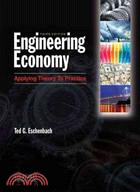
Now in its third edition, Ted G. Eschenbach's Engineering Economy: Applying Theory to Practice continues to solidify its reputation as one of the most innovative, authoritative, and reliable texts in Engineering Economics. It provides the tools and concepts--including cost estimating, sensitivity analysis, probability, and multiple objectives--that are necessary to successfully apply engineering economy in industry practice outside of the classroom.
New to this Edition:
* A complete casebook on the in-text CD. Cases in Engineering Economy, Second Edition, by William Peterson and Ted G. Eschenbach (with contributed cases from 13 other professors of engineering economics) provides 54 robust, real-world cases. Each chapter is keyed to the cases--making it quick and easy to integrate them into courses--and complete solutions are available to instructors upon adoption.
* A new appendix on using financial calculators. Appendix B demonstrates how using financial calculators, while requiring the same conceptual understanding as tables, can be a great time saver.
* Further spreadsheet integration into topical coverage throughout the book. Chapter 10 now includes a spreadsheet approach that greatly simplifies the task of finding the optimal economic life.
* Expanded ethics coverage added to the decision-making discussion in Chapter 1.
* Topical coverage throughout updated and refined. Chapter 12 now includes the 50% initial "bonus" depreciation that has been used to stimulate economic activity; Chapter 18 now overviews real options; and Chapter 5 now includes simple formulae for perpetual economic gradient, perpetual arithmetic gradient, and perpetual annual series.
* A set of FE exam practice problems in the new Appendix D.
Designed to emphasize the strengths of traditional factors and of spreadsheet coverage, Engineering Economy: Applying Theory to Practice, Third Edition, is an ideal text for undergraduate and beginning graduate-level Engineering Economy courses.
作者簡介
Ted G. Eschenbach, P.E., is a consultant and Professor Emeritus of Engineering Management at the University of Alaska Anchorage. He received his Ph.D. in industrial engineering from Stanford University and his M.C.E. degree from the University of Alaska Anchorage.