商品簡介
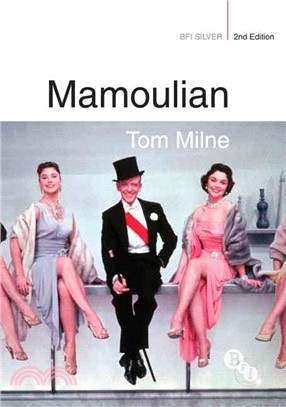
Milne makes a case for the director as a unique talent, important for far more than the technical innovations for which he has rightly received recognition. Milne takes as his `basic text' a quote from Mamoulian: `In direction and staging, I used my favourite principle of integrating all theatrical elements into one stylised rhythmic pattern.' He provides a detalied film-by-film analysis of Mamoulian's oeuvre, discussing key sequences such as the openings of Applause (1929) and Dr Jekyil and Mr Hyde (1931), the famous bedroom-stroking sequence in Queen Christina and the thrilling action scenes in The Mark of Zorro (1940). He also considers Mamoulian's skilful direction of his leading actors and his ability to blend music, dance and dialogue to delightful effect in musicals like Love Me Tonight (1932) and Silk Stockings (1957).
In his foreword to this new edition, Geoff Andrew argues that, as with Mamoulina, Milne's contribution to film criticism and our understanding of cinema has been unjustly overlooked. Reflecting on Mamoulian, Andrew highlights how Milne successfully challenges widely-held assumptions about the director's work, and how effectively he conveys Mamoulian's skill in creating an uncommonly kinetic, meticulously choreographed style of filmic storytelling.
作者簡介
Tom Milne (1926-2005) contributed to many publications during his long and distinguished career and served as Associate Editor of Sight & Sound and Editor of The Monthly Film Bulletin. The books he wrote and edited include Losey on Losey (1967), The Cinema of Carl Dreyer (1971) and Godard on Godard (1972). He was one of the General Editors of the Cinema One series.
Geoff Andrew is Head of Film Programme at BFI Southbak, London, and the author of several books including Nicholas Ray: Poet of Nightfall (2004) and, in the BFI Film Classics series, volumes on Kieslowski's Three Colours Trilogy and Kiarostami's 10.