




滿額折
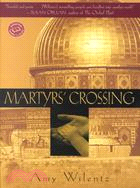
Martyrs' Crossing: A Novel
商品資訊
系列名:Ballantine Reader's Circle
ISBN13:9780345449832
出版社:Ballantine Books
作者:Amy Wilentz
出版日:2002/01/01
裝訂:平裝
規格:21.6cm*14.6cm*1.9cm (高/寬/厚)
定價
:NT$ 570 元優惠價
:
79 折 450 元
絕版無法訂購
商品簡介
作者簡介
商品簡介
1. Who are the martyrs of the title? How does the author use the idea of martyrdom--dying for a cause--throughout the interwoven stories of her characters? What is the author's attitude toward such martyrdom? 2. Who are the heroes of Martyrs' Crossing ? Discuss how Yizhar, Ahmed, Shuekhi, Zvili, Doron, George Raad and Hassan, too, each act according to (or in spite of) personal codes of honor, morality, and patriotism. In a conversation between Yizhar and Doron, Yizhar says, 'I despise heroes . . . Heroes act, and other people suffer.' Which character comes closest to the author's idea of a hero? What constitutes a hero for our time? 3. As Marina is crossing the checkpoint with masses of Palestinians, she thinks T hey were her own people, standing packed around her. Finally, she was sharing their predicament. She had always thought she wanted to. Is Marina a certain kind of American naif? Or is she politically committed in a way her father is not? Is her marriage to Hassan the result of naivete? In what ways has her American upbringing left her unprepared to return to her people? Do Americans romanticize the struggles of disenfranchised people? Do Americans romanticize the Israeli-Palestinian conflict? Why do you think the author chose to give Marina an American past? 4. Underlying the stories in Martyrs' Crossing are the twin questions of what constitutes home , and, what is the meaning of home? George thinks of his friend Ahmed, (Chapter 10 p. 113) 'It had been decades since they leaned against each other in this familiar way, not considering politics and the oceans that divided them. Possibly, George thought, this is the meaning of home.' Hassan (p. 153) has been teaching Marina about her homeland, saying 'You call yourself a Palestinian?' How is the idea of home different for the various characters in this story? What is your idea of home? 5. In this story, people who are ostensibly on the same side do not appear to trust each other. Allies are enemies and foes might be friends. Doron and Marina, for example, seem to understand that in other circumstances they might have more in common than not. George and Ahmed are described as friends in the early part of the book, and by the end, George is described as Ahmed's 'greatest enemy,' because of differences in what they believe. Doron thinks: I am the enemy, I am the enemy , and he asks Yizhar, 'So are we enemies now?' (p. 195) Which characters seem to you to be worthy of the term 'enemy'? Which characters seem truly at cross purposes? Which are truly dangerous, and to whom? Who is worthy of trust, and for whom? 6. What are the different ways in which the death of Ibrahim becomes fodder for both the Palestinian and Israeli political machines? Discuss the uses of human tragedy for political purpose. Is this inevitable? Justifiable? How does this kind of propagandizing escalate or ease tension? 7. Discuss George's relationship with Ahmed. Throughout the book, George dwells on his childhood friendship with Ahmed. After Ibrahim's death, George thinks, 'If Ahmed was insincere under these circumstances, then Palestine was lost to George.' (p. 56) How does their friendship evolve over the course of the book? Do the two men have the same goal? The same beliefs? 8. Examine Yizhar's brand of loyalty to Israel. He spins the death of Ibrahim in the press, (p. 72) and Wilentz writes, 'Yizhar felt no remorse. His version of the story was not a lie.' Is Yizhar lying? Should he feel remorse? In Yizhar's job, where is the line between good and evil? Discuss the differences between Yizhar and Doron. 9. Is there a particular politics or ideology underlying the story in Martyrs' Crossing? Is the book more sympathetic to one side or the other? 10. 'Our little Ibrahim was not a brave Palestinian freedom fighter,' George says at his grandson's funeral. (p. 178) 'If you want to place blame for my grandson's death, look in the mirror as well. Look at yourself and the Authority.' Because of that speech, the lawyer Sheukhi believes George Raad to be a traitor. Sheukhi has one rule, (on p. 185) 'Never criticize a fellow Palestinian in public.' Yizhar, too, seems to have a similar rule about his fellow Israelis. What are the uses of loyalty in a political conflict? Is this unwillingness to criticize one's own a good impulse, or a bad one? What other examples--say, in police departments--of this unwillingness to criticize one's own can you think of? Discuss the characters' choices in terms of moral absolutism and moral relativism. Is George a traitor to his people? Is Doron a traitor to his? 11. Sheukhi makes a choice. Doron makes a different kind of choice. Both men feel a need to act. Contrast their choices. 12. James Baldwin wrote, 'We are trapped in history, and history is trapped in us.' How are the characters in Martyrs' Crossing trapped in history? How is it trapped in them? Do you believe human beings can escape the trap of history? If so, how? Who in this story comes closest to escaping? What historical
作者簡介
Amy Wilentz won the PEN/Martha Albrand Prize for nonfiction and the Whiting Writers Award, and was a nominee for the National Book Critics Circle Award in 1990. She is the author of The Rainy Season and has written for The Nation, The New Republic, and The New York Times. She was the Jerusalem correspondent for The New Yorker from 1995 to 1997. She lives in New York City with her husband and three sons.










購物須知
外文書商品之書封,為出版社提供之樣本。實際出貨商品,以出版社所提供之現有版本為主。部份書籍,因出版社供應狀況特殊,匯率將依實際狀況做調整。
無庫存之商品,在您完成訂單程序之後,將以空運的方式為你下單調貨。為了縮短等待的時間,建議您將外文書與其他商品分開下單,以獲得最快的取貨速度,平均調貨時間為1~2個月。
為了保護您的權益,「三民網路書店」提供會員七日商品鑑賞期(收到商品為起始日)。
若要辦理退貨,請在商品鑑賞期內寄回,且商品必須是全新狀態與完整包裝(商品、附件、發票、隨貨贈品等)否則恕不接受退貨。