商品簡介
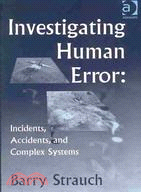
This is a paperbound reprint of a 2002 book. Utilizing aviation accidents for most of his examples, but stressing the applicability of the material to any investigation of the causes of human error in transportation and industrial systems, Strauch (psychology, George Mason U. and aviation management, George Washington U.) offers advice to operational accident investigators. A central concept in his methodology is that, in complex systems, antecedents to error are just as important to understanding accidents as the actual errors themselves. He describes the different types of antecedents, explores data sources and analysis techniques, and reviews a DC-9 accident as a means to illustrate his points. Annotation c2004 Book News, Inc., Portland, OR (booknews.com)
作者簡介
Barry Strauch has lectured and taught human factors, aircraft accident investigation techniques, and human error to accident investigators, graduate students, and government and industry officials throughout the world. He is an adjunct faculty member of the psychology department of George Mason University in Fairfax, Virginia, an instructor at George Washington University's aviation management certificate program in Washington, DC, and serves on the editorial board of the International Journal of Aviation Psychology. He has been with the National Transportation Safety Board for over 18 years as a human performance investigator, major aircraft accident investigator in charge, chief of the human performance division, and currently, Assistant Director for Instruction of the NTSB Academy. He has investigated accidents in all major transportation modes, involving vehicles ranging from passenger trains, to Boeing 747s, to nuclear attack submarines. He earned a PhD in educational psychology from the Pennsylvania State University and holds a commercial pilot certificate, with an instrument aeroplane rating.