商品簡介
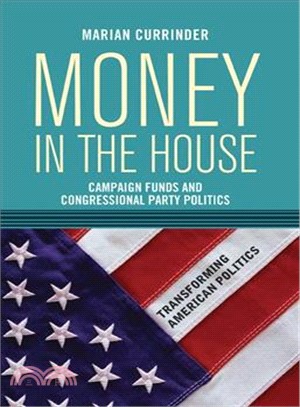
Party leaders in the US House of Representatives are expected to raise tremendous amounts of money for congressional campaign committees and for other party candidates and the ability to do so has become a key factor in the gaining and maintaining leadership positions within the House. Currinder (Government Affairs Institute, Georgetown U.) explores how this system came to be following reforms in the 1970s and considers its implications for Congressional politics. He presents a theory of the relationship between House members and the congressional party organizations that rests on the idea that when partisan margins are small and power is centralized in the leadership, party leaders are better able to distribute money to satisfy party goals, but that when the opposite holds, House members can redistribute money so as to satisfy their individual agendas. He then examines this theory against the evolution of Congress from the 1970s reforms through the election of Nancy Pelosi as House Speaker. Annotation c2008 Book News, Inc., Portland, OR (booknews.com)
作者簡介
Marian Currinder is a senior fellow for the Government Affairs Institute at Georgetown University. She has also taught at the College of Charleston and the University of Florida.