商品簡介
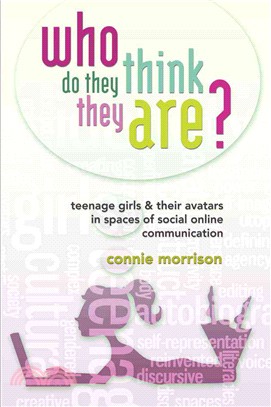
On the social networking site WeeMee, users create free cartoon-like avatars to represent themselves in online social spaces, then use real-life currency (in the form of credit cards and prepaid WeeWorld cards) to purchase clothing and accessories for their avatars. Yes, really. Employing a critical media literacy framework to explore the ways in which online identities are negotiated, Morrison (intermediate and high school English methods, Memorial University) reports on her study of 10 Canadian girls, ages 13-17, as they created avatars on WeeMee and then participated in an online forum to discuss the creation and purchasing choices they made. The book begins by introducing the girls and their avatars. The author then examines virtual space as a laboratory for performativity and identity construction, and looks at how the girls struggled to represent themselves accurately in the context of the site's commercial content. The book's readership includes educators and researchers interested in the social construction of identity. It can be used in courses in areas such as literacy studies, media education, youth studies, teacher education, and women's studies. Annotation c2010 Book News, Inc., Portland, OR (booknews.com)
作者簡介
The Author: Connie Morrison is a doctoral candidate at Memorial University’s Faculty of Education where she teaches courses in teaching and reading popular culture, curriculum teaching and learning, adolescent literature, and intermediate and high school English methods. Her background in media education, English as cultural studies, and social justice pedagogy informs her research in avatar design and the online identity and representation of teenaged girls. She contributed a chapter, ?Critical Autobiography for Transformative Learning: Gaining a Perspective on Perspective?, to Narrating Transformative Learning in Education (2008), and an article, ?The Everyday Practice of Avatar Creation?, to The Canadian Journal for New Scholars in Education.