商品簡介
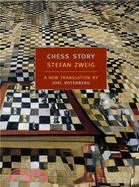
The art of the great Austian writer Stefan Zweig was a difficult balancing act. Zweig's major subject was human limitation, above all the ways in which the best of intentions can lead people into the murkiest of emotional and moral cul-de-sacs. And yet Zweig also hoped to illumine those dark places of the heart and mind, to show that it is not, finally, impossible to attain a true perspective on our limitations, even to care for each other. Zweig, much like his contemporary E.M. Forster, was liberal and humanist to the core, gambling on human goodness against the specters of oppression and despair.
In 1938, Nazism forced Zweig into exile. Chess Story, sometimes known as The Royal Game, was the last thing he wrote before he and his wife committed suicide. This novella is a final effort to take the human measure of the inhuman. On a great ocean liner, the world champion of chess confronts a lawyer with a surprising talent for the game in a tense contest of wit and will. How the lawyer acquired his skill and at what terrible cost are the substance of a story, in which, at the same time, quietly but unmistakably, the death knell of the Enlightenment is sounded.
作者簡介
Stefan Zweig (1881-1942), novelist, biographer, poet, and translator, was born in Vienna into a wealthy Austrian Jewish family. During the 1930s, he was one of the best-selling writers in Europe, and was among the most translated German-language writers before the Second World War. With the rise of Nazism, he moved from Salzburg to London (taking British citizenship), to New York, and finally to Brazil, where he committed suicide with his wife. New York Review Books has published Zweig’s novels?The Post-Office Girl?and?Beware of Pity?as well as the novella?Chess Story.
Peter Gay is Director of the Center for Scholars and Writers at the New York Public Library. He wrote?Schnitzler’s Century: The Making of Middle-Class Culture, 1815–1914.