商品簡介
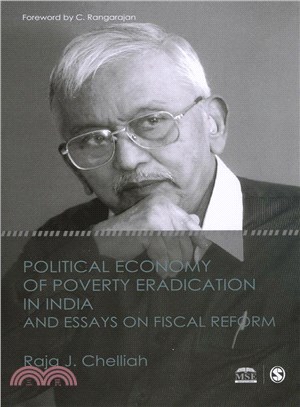
This book brings together three essays of Dr Chelliah on reforms and poverty alleviation. Together they unravel the working of the Indian political economy and explain the causes behind persistent poverty in the country despite economic growth. The essays address the issues of effective means of poverty reduction by the states, reforms of federal fiscal relations, and taxes.
Dr Chelliah's central premise is that the major fault of India's economic policy has been that it was largely based on the democratic socialist thought, thereby entrusting the government with the greatest responsibility. For the democratic process to be effective, masses need to be able to form independent political judgement. For achieving this, Dr Chelliah suggests a four-pronged approach of universal education, scientific outlook, political and ethical transformation. He then goes on to suggest innovative policy reforms that would help the states lagging behind to develop. In doing that, among other things, he makes various tax reform recommendations relating to personal income tax, corporate income tax, and indirect taxes.
This book will be invaluable for students and scholars of development economics, political economy, public finance, public administration and economics.
作者簡介
Late Raja J. Chelliah was one of India's most respected economists, referred to as the Father of Tax Reforms by his peers. He is best known for his work as Chairman of the Tax Reforms Committee between 1991 and 1993, which set out a roadmap for reducing import duties. This paved the way for liberalisation in India. A specialist in public finance and an institutional builder, Dr Chelliah founded the National Institute of Public Finance and Policy in 1976. He also founded the Madras School of Economics and was Professor Emeritus there. He was honoured with a Padma Vibhushan in 2007.