商品簡介
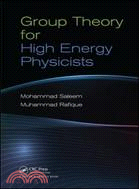
Although group theory has played a significant role in the development of various disciplines of physics, there are few recent books that start from the beginning and then build on to consider applications of group theory from the point of view of high energy physicists. Group Theory for High Energy Physicists fills that role. It presents groups, especially Lie groups, and their characteristics in a way that is easily comprehensible to physicists.
The book first introduces the concept of a group and the characteristics that are imperative for developing group theory as applied to high energy physics. It then describes group representations since matrix representations of a group are often more convenient to deal with than the abstract group itself. With a focus on continuous groups, the text analyzes the root structure of important groups and obtains the weights of various representations of these groups. It also explains how symmetry principles associated with group theoretical techniques can be used to interpret experimental results and make predictions.
This concise, gentle introduction is accessible to undergraduate and graduate students in physics and mathematics as well as researchers in high energy physics. It shows how to apply group theory to solve high energy physics problems.
作者簡介
Dr. Mohammad Saleem is a professor emeritus at the University of the Punjab and a professor at the Institute for Basic Research in Florida. He has written more than 150 research papers on high energy physics and is an editor of the Hadronic Journal.
Dr. Muhammad Rafique was a professor of applied mathematics at University of the Punjab.
目次
Elements of Group Theory Definition of a Group Some Characteristics of Group ElementsPermutation Groups Multiplication Table Subgroups Power of an Element of a Group Cyclic Groups Cosets Conjugate Elements and Conjugate Classes Conjugate Subgroups Normal Subgroups Centre of a Group Factor Group Mapping Homomorphism Kernel Isomorphism Direct Product of Groups Direct Product of Subgroups
Group Representations Linear Vector Spaces Linearly Independent Vectors Basic Vectors Operators Unitary and Hilbert Vector Spaces Matrix Representative of a Linear Operator Change of Basis and Matrix Representative of a Linear Operator Group Representations Equivalent and Unitary Representations Reducible and Irreducible Representations Complex Conjugate and Adjoint Representations Construction of Representations by Addition Analysis of Representations Irreducible Invariant Subspaces Matrix Representations and Invariant Subspaces Product Representations
Continuous Groups Definition of a Continuous Group Groups of Linear Transformations Order of a Group of Transformations Lie Groups Generators of Lie Groups Real Orthogonal Group in 2 Dimensions: O(2) Generators of SU (2) Generators of SU (3) Generators and Parameterisation of a Group Matrix Representatives of Generators Structure Constants Rank of a Lie Group Lie Algebras Commutation Relations between the Generators of a Semi-Simple Lie Group Properties of the Roots Structure Constants Nαβ Classification of Simple Groups Roots of SU (2) Roots of SU (3) Numerical Values of Structure Constants of SU (3) Weights of a Representation Computation of the Highest Weight of any Irreducible Representation of SU (3) Dimension of any Irreducible Representation of SU (n) Computation of Weights of an Irreducible Representation of SU (3) Weights of the Irreducible Representation D8 (1,1) of SU(3) Weight Diagrams Decomposition of a Product of Two Irreducible Representations
Symmetry, Lie Groups, and Physics Symmetry Casimir Operators Symmetry Group and Unitary Symmetry Symmetry and Physics Group Theory and Elementary Particles
Appendices
Index