商品簡介
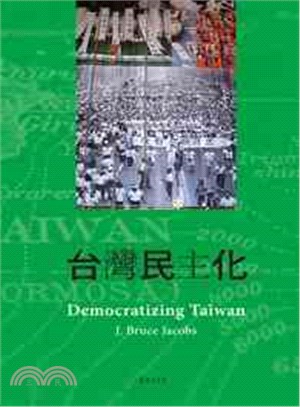
Jacobs (Asian languages and studies, Monash U., Australia) examines the processes of Taiwan's democratization (drawing an important distinction between democratization and liberalization--with the latter understood as songbanghua, or ("loosening restrictions") as it emerged from the centuries of colonial administrations that held sway from 1624 and the arrival of the Dutch to the 1988 death of Kuomintang (KMT) leader Chiang Ching-kuo. He provides an account of political developments from Lee Teng-hui's assumption of the presidency through to the legislative and presidential elections of 2008, which brought the Kuomintang back to power, and the first three years of the Ma Ying-jeou administration. The key factors he identifies as being important to the overall process of Taiwanese democratization are administrative, economic, social, and educational development under the Chinese; relatively high educational levels under the KMT and Japan; electoral experience under Japanese and KMT colonial rule; increasing economic prosperity paired with increasing equality; the existence of reformist elements among the top KMT leadership; a non-violent, democratic opposition; links between moderates and reformers in, respectively, the opposition and the government; American political pressure; and fear generated by the sudden fall of President Marcos of the Philippines in 1986. A brief comparative discussion of South Korean democratization processes is also included. Annotation c2012 Book News, Inc., Portland, OR (booknews.com)
作者簡介
J. Bruce Jacobs is Professor of Asian Languages and Studies at Monash University in Melbourne, Australia. He received his PhD from Columbia University in 1975. Professor Jacobs has published numerous works on Taiwan and China over the past forty years.