商品簡介
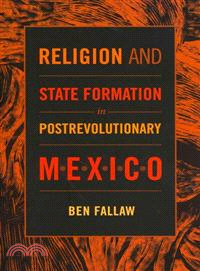
The religion question---the place of the Church in a Catholic country after an anticlerical revolution---profoundly shaped the process of state formation in Mexico. From the end of the Cristero War in 1929 until Manuel Avila Camacho assumed the presidency in late 1940 and declared his faith, Mexico's unresolved religious conflict roiled regional politics, impeded federal schooling, undermined agrarian reform, and flared into sporadic violence, ultimately frustrating the secular vision shared by Plutarco Elias Calles and Lazaro Cardenas
Ben Fallaw argues that previous scholarship has not appreciated the pervasive influence of Catholics and Catholicism on postrevolutionary state formation. By delving into the history of four understudied Mexican states, he is able to show that religion swayed regional politics not just in states such as Guanajuato, in Mexico's central-west "Rosary Belt," but even in those considered much less observant, including Campeche, Guerrero, and Hidalgo. Religion and State Formation in Postrevolutionary Mexico reshapes our understanding of agrarian reform, federal schooling, revolutionary anticlericalism, elections, the Segunda (a second Cristero War in the 1930s), and indigenism, the Revolution's valorization of the Mesoamerican past as the font of national identity
"This important book forces a rethinking of the efficacy and influence of agrarian and cultural revolutions not only in Mexico but throughout the world. In what is nothing short of a massive reappraisal of the pivotal presidency of Lazaro Cardenas, Ben Fallaw demonstrates how conservative Catholic opposition at the local and state levels consistently obstructed Cardenista reform. Based on his detailed reconstruction of circumstances and events in four very different Mexican states, he reminds us that conditions differed enormously among locales, even between two villages in the same state. His research is blockbuster in every possible way."---Terry Rugeley, author of Of Wonders and Wise Men: Religion and Popular Cultures in Southeast Mexico, 1800-1876
"Religion and State Formation in Postrevolutionary Mexico should establish itself as a key text in Mexican revolutionary history. The author has done a prodigious quantity of research and organized it expertly, producing an original and convincing analysis of a major theme: Church-state conflict in the postrevolutionary period. The issue permeated Mexican politics, and its exploration opens a window onto a variety of other themes, including state building, education, land reform, gender, ethnicity, violence, and local politics and elections."---Alan Knight, author of The Mexican Revolution
作者簡介
Ben Fallaw is Associate Professor of History and Latin American Studies at Colby College. He is the author of Cardenas Compromised: The Failure of Reform in Postrevolutionary Yucatan, also published by Duke University Press, and a coeditor of Peripheral Visions: Politics, Society, and the Challenges of Modernity in Yucatan.