商品簡介
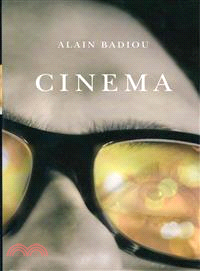
For Alain Badiou, cinema is an education, an art of living, and a way of thinking. From the late 1950s to the present, he has written about his relationship with “the seventh art” in about thirty texts that amount to a comprehensive vision and interpretation of cinema. These texts offer a wide-ranging analysis of the cinema of the last fifty years, from filmmakers of modernity (Murnau, Tati, Oliveira, Antonioni, Godard) to certain contemporary American films (The Matrix, Magnolia, A Perfect World), by way of a few unique experiments (Guy Debord, the cinema of ’68, etc.).
Films think, and it is the task of the philosopher to transcribe that thinking. What is the subject to which the film gives expressive form? This is the question that lies at the heart of Badiou’s account of cinema. He contends that cinema is an art form that bears witness to the other and renders human presence visible, thus testifying to the universal value of human existence and human freedom. Through the experience of viewing, the movement of thought that constitutes the film is passed on to the viewer, who thereby encounters an aspect of the world and its exaltation and vitality as well as its difficulty and complexity. Cinema uses and recapitulates the other arts; it doesn’t just intermingle with them but it magnifies, transforms and subjugates them. Cinema is an impure art cannibalizing its times, the other arts, and people Ð a major art precisely because it is the locus of the indiscernibility between art and non-art. It is this, argues Badiou, that makes cinema the social and political art par excellence, the best indicator of our civilization, in the way that Greek tragedy, the coming-of-age novel and the operetta were in their respective eras.
作者簡介
Alain Badiou was Chair of the Department of Philosophy at the Ecole Normale Superieure in Paris and is one of the leading philosophers in France today. His many books include Being and Event and The Century.