商品簡介
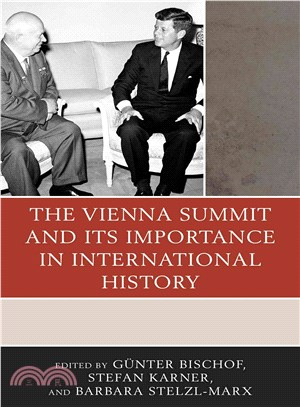
At the beginning of June 1961, the tensions of the Cold War were supposed to abate as both sides sought a resolution. The two most important men in the world, John F. Kennedy and Nikita Khrushchev, met for a summit in Vienna. Yet the high hopes were disappointed. Within months the Cold War had become very hot: Khrushchev built the Berlin Wall and a year later he sent missiles to Cuba, in order to threaten the United States directly. Despite the fact that the Vienna Summit yielded barely any tangible results, it did lead to some very important developments. In The Vienna Summit and Its Importance in International History international experts use new sources to analyze what really happened at that time.
作者簡介
Gunter Bischof is a university research professor and director of CenterAustria at the University of New Orleans, Louisiana.
Stefan Karner is a professor at the Department of Economic, Social, and Business History at the University of Graz and directs the Ludwig Boltzmann Institute for Research of War Consequences.
Barbara Stelzl-Marx is deputy director of the Ludwig Boltzmann Institute for Research of War Consequences and lecturer at the University of Graz.