商品簡介
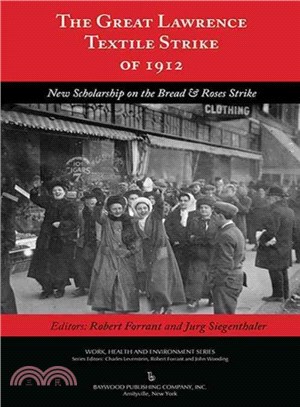
In Lawrence, Massachusetts, fully one-half of the population 14 years of age or over is employed in the woolen and worsted mills and cotton mills. Thus begins the federal government's Report on Strike of Textile Workers in Lawrence, Massachusetts in 1912. This book follows up, one hundred years later. The story's retelling offers readers an exciting reexamination of just how powerful a united working class can be. The Great Lawrence Textile Strike of 1912—the Bread and Roses Strike—was a public protest by 20,000 to 25,000 immigrant workers from several countries, prompted by a wage cut. Backed by skillful neighborhood organizing, supported by hundreds of acts of solidarity, and unified by a commitment to respect every striker's nationality and language, the walkout spread across the city's densely packed tenements. Defying the assumptions of mill owners and conservative trade unionists alike that largely female and ethnically diverse workers could not be organized, the women activists, as one mill boss described them, were full of “lots of cunning and also lots of bad temper. They're everywhere, and it's getting worse all the time.” Events in Lawrence between January 11 and March 25, 1912, changed labor history. In this volume the authors tackle the strike story through new lenses and dispel assumptions that the citywide walkout was a spontaneous one led by outside agitators. They also discuss the importance of grasping the significance of events like the 1912 strike and engaging in the process of community remembrance.Intended Audience: This book appeals to a wide constituency. Most directly, it is of great relevance to historians of labor, industrialization, immigration, and the development of cities, as well as researchers studying social movements. The story of the Bread and Roses Strike resonates strongly with social justice supporters, the women's movement, advocates for children's well-being, and anti-poverty organizations. Social studies and college-level teachers will find it a rich resource. Graduate-level students will find inspiration for further research. The Bread and Roses strike has excellent name recognition and has always had a considerable international audience.
作者簡介
Robert Forrant is a University of Massachusetts Lowell Professor of History and chaired the Lawrence-based Bread and Roses Centennial Committee. He received his PhD from the university of Massachusetts Amherst in 1994. Before that he worked as a machinist. He co-curated “The Bread and Roses Strike of 1912: Two Months in Lawrence, Massachusetts, That Changed Labor History” for the Digital Public Library of America. Recent publications include The Big Move: Immigrant Voices From a Mill City, with Christoph Strobel (Loom Press, 2011); and Metal Fatigue: American Bosch and the Demise of Metalworking in the Connecticut River Valley (2009). He serves as historian to numerous Teaching American History grants, is on the board of the Lawrence History Center, and works with the Tsongas Industrial History Center in Lowell, Massachusetts, on its National Endowment for the Humanities summer teachers' residency program. Jurg Siegenthaler is emeritus professor of social policy at American University in Washington, DC. He received his PhD from the University of Bern and was a postdoctoral fellow at Cornell University–New York State School of Industrial and Labor Relations. He also was a visiting researcher at the International Social Security Association and the U.S. Social Security Administration. His teaching and research have mainly encompassed the social and economic history of industrialization. He has written on producers' cooperatives, long-term changes in workers' standard of living, and work and technology, and published a book comparing the environmental and social costs of industrialization in a Swiss textile valley and the coal economy of Scranton, Pennsylvania. Siegenthaler has been a member of the Bread and Roses Heritage Committee in Lawrence, Massachusetts, and a co-coordinator of the Lawrence History Live speakers' tent at the Bread and Roses Heritage Festival on Labor Day.