商品簡介
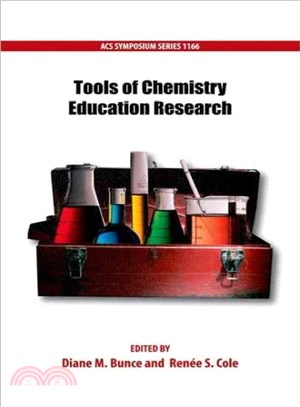
Tools of Chemistry Education Research meets the current need for information on more in-depth resources for those interested in doing chemistry education research. Renowned chemists Diane M. Bunce and Renee S. Cole present this volume as a continuation of the dialogue started in their previous work, Nuts and Bolts of Chemical Education Research. With both volumes, new and experienced researchers will now have a place to start as they consider new research projects in chemistry education.Tools of Chemistry Education Research brings together a group of talented researchers to share their insights and expertise with the broader community. The volume features the contributions of both early career and more established chemistry education researchers, so as to promote the growth and expansion of chemistry education. Drawing on the expertise and insights of junior faculty and more experienced researchers, each author offers unique insights that promise to benefit other practitioners in chemistry education research.
作者簡介
Diane M. Bunce (Ph.D.) is a Professor of Chemistry at The Catholic University of America. She received her B.S. degree in chemistry from Le Moyne College, M.A.T. degree in science education from Cornell University and Ph.D. in chemical education from the University of Maryland-College Park. Her research deals with how students learn chemistry and the mismatch between the way we teach chemistry and what we know about how students learn. Diane received the ACS 2011 Pimentel Award for Chemical Education and the 2001 Helen Free Award for Public Outreach. She has served as editor or co-editor of two other ACS Symposium Series books.
Renee S. Cole (Ph.D.) is an Associate Professor of Chemistry at the University of Iowa. Dr. Cole earned a B.A. in chemistry from Hendrix College, and M.S. and Ph.D. degrees in physical chemistry from the University of Oklahoma. Her research focuses on issues related to how students learn chemistry and how that guides the design of instructional materials and teaching strategies as well on efforts related to faculty development and the connection between chemistry education research and the practice of teaching.