商品簡介
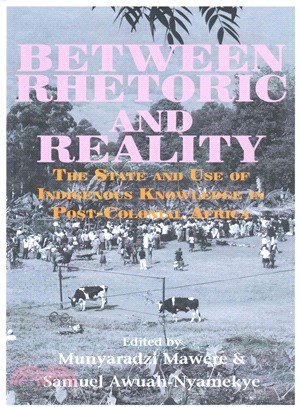
Social anthropology, religion, and other scholars from Africa offer 13 essays on the status and role of indigenous knowledge and technologies in post-colonial Africa, focusing on Ghana, Nigeria, South Africa, and Zimbabwe, and emphasizing the need for recognition of this knowledge in mainstream knowledge production. They examine how indigenous knowledge has been used in Zimbabwe to predict disaster; whether traditional Yoruba Africans had scientific and technological knowledge, and the influence of Islam, colonialism, and Christianity in eradicating traditional African civilization; how indigenous knowledge systems in Zimbabwe were assimilated in the guise of colonial translation; and traditional healers and medicine in South Africa. They also address pre-colonial and colonial wildlife conservation practices; the relationship between non-state actors and local communities in coping with the changing climatic environment in Zimbabwe; the relationship between religion and the restoration of health among the Akan people of Ghana; indigenous knowledge and the management of ecological resources for Africa's development; the role of indigenous Shona cultural beliefs and practices in the conservation of the environment; indigenous knowledge systems and dispute resolutions, using the Yoruba as an example; and the role and efficacy of indigenous knowledge in sustainable development in Zimbabwe and Ghana. Distributed in North America by the African Books Collective. Annotation c2015 Ringgold, Inc., Portland, OR (protoview.com)