商品簡介
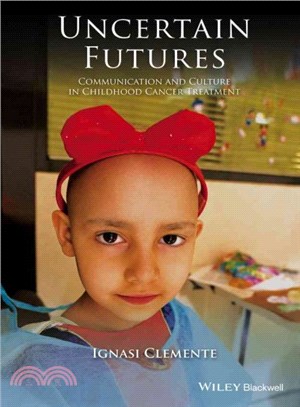
This book examines children and young people's attempts to participate in conversations about their own treatment throughout uncertain cancer trajectories, including the events leading up to diagnosis, treatment, remission, relapse, and cure or death. Focusing on one hospital in Barcelona, Spain. Clemente examines the cat-and-mouse game between the children and young people who persistently ask questions, and the adults who attempt to protect them from potentially distressing news.
Doctors and parents use six strategies that are often contradictoryuincluding deception, complete non-disclosure, and partial disclosureuto regulate communication according to the changing circumstances of a specific child's cancer trajectory. A fundamental objective of this communication regulation is to prevent the multiple uncertainties associated with cancer and its treatment from becoming the central focus of talk and social life. Clemente also highlights that containing these uncertainties requires an institutional mandate to practice hope and optimism, to hide negative emotions, and to curtail talk about the future. Clearly and compellingly written, Clemente provides new models for examining cancer communicat ion in this fascinating study that provides ethnographic case studies of childhood cancer patients in Spain, using children's own words.
作者簡介
Ignasi Clemente is Assistant Professor in the Department of Anthropology at Hunter College, CUNY, USA. His research interests include sociocultural and communicative aspects of pain and suffering, childhood studies, and embodied communication. His research on chronically ill children has been published in journals including Social Science and Medicine, Sociology of Health and Illness, and Communication and Medicine. Among others, he has contributed to theOxford Textbook of Paediatric Pain (2013), the Handbook of Conversation Analysis (Wiley-Blackwell, 2013),Healthcare Settings: Policy, Participation and New Technologies (Wiley-Blackwell, 2010), and the Blackwell Guide to Research Methods in Bilingualism (Blackwell, 2008).