商品簡介
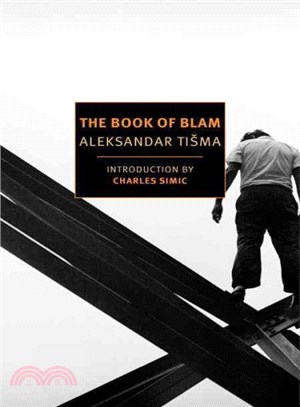
The war is over. Miroslav Blam walks along the former Jew Street, and he remembers. He remembers Aaron Grun, the hunchbacked watchmaker; and Eduard Fiker, a lamp merchant; and Jakob Mentele, a stove fitter; and Arthur Spitzer, a grocer, who played amateur soccer and had non-Jewish friends; and Sandor Vertes, a lawyer who was a Communist. All dead. As are his younger sister and his best friend, a Serb, both of whom joined the resistance movement; and his mother and father in the infamous Novi Sad raid in January 1942—when the Hungarian Arrow Cross executed 1,400 Jews and Serbs on the banks of the Danube and tossed them into the water.
Blam lives. So long as he does, the war will never be over for him.
Like The Use of Man, The Book of Blam is a searing look at the spiritual devastation of war.
作者簡介
Aleksandar Ti?ma (1924–2003) was born in the Vojvodina, a former province of the Austro-Hungarian Empire that had been incorporated into the new Kingdom of Yugoslavia after the First World War. His father, a Serb, came from a peasant background; his mother was middle-class and Jewish. The family lived comfortably, and Ti?ma received a good education. In 1941, Hungary annexed Vojvodina; the next year—Ti?ma’s last in high school—the regime carried out a series of murderous pogroms, killing some 3,000 inhabitants, primarily Serbs and Jews, though the Ti?mas were spared. After fighting for the Yugoslav partisans, Ti?ma studied philosophy at Belgrade University and went into journalism and in 1949 joined the editorial staff of a publishing house, where he remained until his retirement in 1980. Ti?ma published his first story, “Ibika’s House,” in 1951; it was followed by the novelsGuilt and In Search of the Dark Girl and a collection of stories, Violence. In the 1970s and ’80s, he gained international recognition with the publication of his Novi Sad trilogy:The Book of Blam (1971), about a survivor of the Hungarian occupation of Novi Sad;The Use of Man (1976), which follows a group of friends through the Second World War and after; andKapo (1987), the story of a Jew raised as a Catholic who becomes a guard in a German concentration camp. Ti?ma moved to France after the outbreak of war and collapse of Yugoslavia in the early 1990s, but in 1995 he returned to Novi Sad, where he spent his last years.
Michael Henry Heim (1943–2012) was a professor of Slavic languages at the University of California, Los Angeles. He translated the NYRB ClassicDancing Lessons for the Advanced in Age by Bohumil Hrabal.