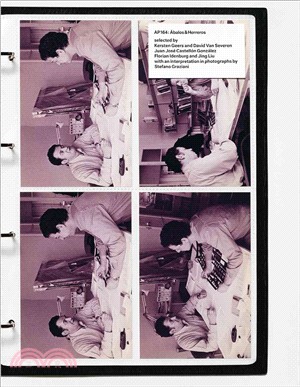
Inaki Abalos and Juan Herreros established the renowned architectural firm Abalos and Herreros in Madrid in the 1980s. At the time, following the end of the Franco regime, architects were more highly valued for their technical ability than for their contributions to theoretical research. In this context, Abalos and Herreros's deliberate and continuous melding of tremendous technical work with a range of publications and curatorial projects presented a remarkable challenge to assumptions about what the purpose of an architect ought to be.
In 2006, the Canadian Centre for Architecture obtained the Abalos and Herreros archive which contains more than 250 documents, sketches, slides, models, collages, and drawings in both print and digital form, dating from the firm's creation in 1984 through 2006 when its founders decided to pursue other projects. The archive presents a compelling opportunity to reconstruct Abalos and Herreros's planning and design process—a process developed through exhaustive research and conversations between the architects and the collaborators and artists involved in their projects. Each of the book's three contributors—some of whom worked with Abalos and Herreros—approaches the archive with specific questions, and their essays explore topics including the architects' fascination with industrial architecture, their capacity to construct a hybrid materiality without recourse to building technology as language, and their innovative visions for landscape architecture.
While many have written about the work of Abalos and Herreros, previous books have been based mainly on their built projects and ongoing research.Out of the Box—Abalos and Herreros is the first book to draw on the firm's archive to offer a new take on this important architectural practice.