商品簡介
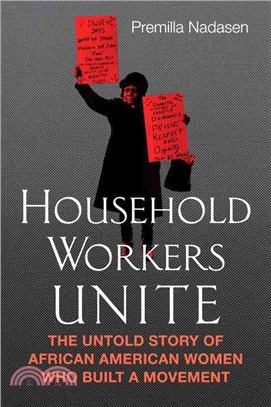
"Premilla Nadasen recounts in this powerful book a little-known history of organizing among African American household workers. She uses the stories of a handful of women to illuminate the broader politics of labor, organizing, race, and gender in late 20th-century America. At the crossroads of the emerging civil rights movement, a deindustrializing economy, a burgeoning women's movement, and increasing immigration, household worker activists, who were excluded from both labor rights and mainstream labororganizing, developed distinctive strategies for political mobilization and social change. We learn about their complicated relationship with their employers, who were a source of much of their anguish, but, also, potentially important allies. And equally important they articulated a profound challenge to unequal state policy. Household Workers Unite offers a window into this occupation from a perspective that is rarely seen. At a moment when the labor movement is in decline; as capital increasingly treats workers as interchangeable or indispensible; as the number of manufacturing jobs continues to dwindle and the number of service sector jobs expands; as workers in industrialized countries find themselves in an precarious situation and struggle hard to make ends meet without state support or protection--the lessons of domestic worker organizing recounted here might prove to be more important than just a correction of the historical record. The women in this book, as Nadasen demonstrates, were innovativelabor organizers. As a history of poor women workers, it shatters countless myths and assumptions about the labor movement and proposes a very different vision"--
作者簡介
Premilla Nadasen is an associate professor of history at Barnard College, Columbia University, and is the author of several books, including the award-winning Welfare Warriors: The Welfare Rights Movement in the United States. A longtime scholar-activist, Nadasen works closely with domestic workers’ rights organizations, for which she has written policy briefs and served as an expert academic witness. She also writes about household labor, social movements, and women’s history for Ms., the Progressive Media Project, and other media outlets.