商品簡介
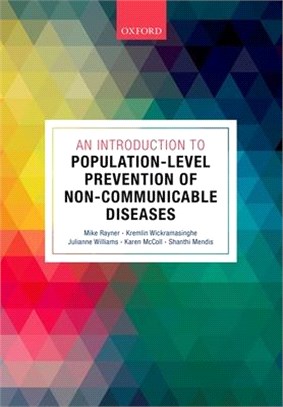
Non-communicable diseases (NCDs) are the single biggest cause of death in the world. They include cardiovascular diseases, such as heart attacks and stroke, cancers, chronic respiratory diseases, like chronic obstructed pulmonary disease and asthma, and diabetes. The World Health Organization published a 'Global Action Plan for the prevention and control of NCDs 2013-2020' which set a target to reduce death rates from NCDs by 25%. In response, countries are drawing up national level NCD prevention policies and programmes. New units have been set by governments, NGOs, and other organisation to drive this agenda forward creating a need for capacity building and training.
Until the Nuffield Department for Population Health at the University of Oxford initiated an accredited six-day short course on Prevention Strategies for Non-Communicable Diseases with a population-based approach, many attempts to engage with NCD prevention centred on individual-level interventions, such as screening and treating individual patients. In this new book, the course leaders bring together the entire scope of the population-based approach and provide a solid introduction to the concepts, evidence, and methods that define it.
'An Introduction to Population-Level Prevention of Non-Communicable Diseases' takes readers through the policy cycle from problem definition, solution generation, capacity building, and implementation to evaluation and monitoring. The book includes a wide range of case studies, and practical examples of plans and projects which illustrate real-life application of theory.
This book provides an unparalleled overview of population-based approaches to the prevention of non-communicable diseases, reflecting the latest research in the field. It will be a key resource for anyone with an interest in NCD prevention, with particular relevance to early-career professionals working on NCD prevention in governments, NGOs, health care institutions, and universities, as they develop the knowledge and skills required for effective population-based prevention strategies.
作者簡介
Mike Rayner, Director and Diet and Nutrition Leader, The British Heart Foundation Centre on Population Approaches for Non-Communicable Diseases Prevention, Nuffield Department for Population Health, University of Oxford, UK,Kremlin Wickramasinghe, Researcher, Cardiovascular Disease Epidemiology Programme, The British Heart Foundation Centre on Population Approaches for Non-Communicable Diseases Prevention, Nuffield Department for Population Health, University of Oxford, UK,Julianne Williams, DPhil candidate, The British Heart Foundation Centre on Population Approaches for Non-Communicable Diseases Prevention, Nuffield Department for Population Health, University of Oxford, UK,Karen McColl, Freelance Consultant, Lotissement La Thuile, Montagny, France,Shanthi Mendis, Coordinator, Chronic Diseases Prevention and Management, Department of Chronic Diseases and Health Promotion, World Health Organization, Switzerland
Mike Rayner is a Professor of Population Health at the Nuffield Department of Population health and Director of the British Heart Foundation Health Centre on Population Approaches for Non-Communicable Disease Prevention, based in the department. The Centre, which Mike founded in 1993, is a World Health Organisation Collaborating Centre on Population Approaches for Non-Communicable Disease Prevention and carries out research in two main areas: the burden of cardiovascular disease and the promotion of healthier diets and increased levels of physical activity. Mike is also Chair of Sustain: the alliance for better food and farming and Chair of its Children's Food Campaign in the UK. He is a trustee of the UK National Health Forum, Chair of the Nutrition Expert Group for the European Heart Network based in Brussels and a member of the Scientific Advisory Panel of the International Obesity Task Force. He is also an ordained priest in the Church of England.
Kremlin Wickramasinghe joined the British Heart Foundation Centre on Population Approaches for Non-Communicable Disease Prevention (BHF CPNP) in 2009 to work on the epidemiology of cardiovascular disease (CVD) and associated risk factors. He also collates and produces statistics for regular publications for the British Heart Foundation. The BHF CPNP was awarded the status of World Health Organisation Collaborating Centre on Population Approaches for Non-Communicable Disease Prevention in 2013 and Dr Wickramasinghe is the Co-Director of the Collaborating Centre. He is also the Course Director for the Short course on prevention strategies for non-communicable diseases organised, on a regular basis, by the BHF CPNP.
Julianne Williams joined the British Heart Foundation (BHF) Centre on Population Approaches for NCD Prevention in October 2012 to work on the coronary heart disease statistics compendia and an analysis of the food environment around schools. Her research interests include the relationships between obesity, socio-economic status, and the food environment as well as how technology can be used to improve our understanding of these associations.
Karen McColl is a freelance consulant based in Lotissement La Thuile, Montagny, France.
Dr Shanthi Mendis coordinates the global program for Prevention and Management of noncommunicable diseases at the World Health Organization, Geneva, Switzerland. She has been the Senior Adviser/coordinator of the World Health Organization cardiovascular and noncommunicable diseases programs from 2000. Dr Mendis served as Professor of Medicine, at the Faculty of Medicine, Peradeniya Sri Lanka from 1979 for twenty years. She is a Fellow of the Royal College of Physicians and a Fellow of the American College of Cardiology. She received post-doctoral training in the United Kingdom and USA, and has wide experience in Global Health, Internal Medicine, Cardiology, Policy development and Research in developing countries and has published widely.