商品簡介
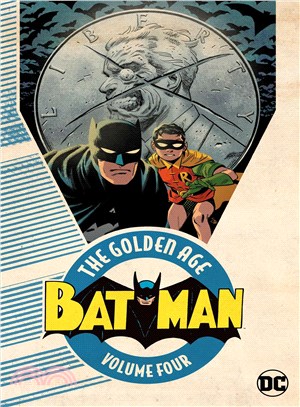
Some of Batman's earliest adventures from the 1940s are collected in this new title.
The 1940s tales that cemented Batman's reputation as the world's greatest crime-fighter are collected in this new paperback. These stories include the Caped Crusader's run-ins with the Joker, the Penguin, Two-Face and more! BATMAN: THE GOLDEN AGE VOL. 4 features the work of such luminaries as Bob Kane, Bill Finger, Jerry Robinson and others.
Collects DETECTIVE COMICS #66-74, BATMAN #12-15 and WORLD'S FINEST COMICS #7-9.
作者簡介
William Finger was born on February 8, 1914. He met cartoonist Bob Kane at a party in 1938, and soon after they were collaborating on several adventure strips. Within a year, Batman appeared. Finger's fondness for pulp fiction and movies influenced his plots and writing style for comic books. He worked on many other DC characters and titles, scripted some of the 1940s daily and Sunday Batman and Robin newspaper strip continuities, and wrote for Quality, Fawcett and Timely.
Finger's television credits include 77 Sunset Strip, The Roaring Twenties and Hawaiian Eye during the late 1950s and early 1960s. His efforts in the superhero genre also appeared on TV in the 1960s, including material for the animated New Adventures of Superman plus a two-part Clock King episode of the 1966 Batman series. Finger died in New York City on January 24, 1974. He was posthumously inducted into the Eisner Awards Hall of Fame in 1999.
Robert Kahn was born on October 24, 1916, in the Bronx and at age 18 legally changed his name to Kane. In 1936, this self-proclaimed "compulsive doodleholic" pencilled and inked his first comic book work, Hiram Hick. By 1938 he was selling humorous filler stories to DC Comics, including Professor Doolittle and Ginger Snap. Kane met writer Bill Finger at a party in 1938, and they soon were collaborating on comic book submissions. Their most famous effort, Batman, first appeared in DETECTIVE COMICS #27 (May 1939). As Batman's popularity demanded additional output, Kane kept up the pace by adding assistants and dropping non-Batman assignments. He discontinued his comic book efforts in mid-1943 to pencil the daily Batman and Robin newspaper strip. After the strip's 1946 demise, Kane returned to illustrating Batman's comic book adventures and, with the help of several guests, remained involved with comics until his retirement in 1968.
The success of the Batman television series brought Kane and his art back into the public eye in 1966. He was subsequently featured in various one-man art shows at galleries and museums nationwide and released a number of limited-edition lithographs. He served as a consultant on the 1989 Batman feature film and its sequels. His autobiography, Batman and Me, was published in 1989, and in 1996 he was inducted into the Eisner Awards Hall of Fame. Kane died on November 3, 1998.