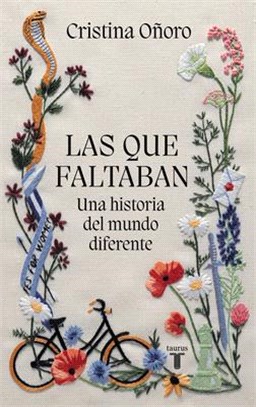
Un relato emocionante, profundo y divertido de la historia de la humanidad en clave femenina. Juana de Arco, Malinche, Sofonisba Anguissola, Mary Wollstonecraft, Victoria Kent, Jane Austen, Marie Curie, Simone Weil o Rosa Parks tambi幯 estuvieron ah? Con brillantez y elegancia, Cristina O隳ro construye un fascinante relato que desmonta las narraciones sobre la humanidad y derriba los discursos mis鏬inos heredados.
A partir de una maravillosa red de conexiones entre experiencias femeninas, Cristina O隳ro cuenta otra historia del mundo, empleando para ello un sinf璯 de detalles memorables y an嶰dotas curiosas, as?como los timos avances de la investigaci鏮 especializada sobre sus protagonistas.
Las que faltaban recorre con rigor algunos momentos hist鏎icos cargados de significado, desde la oscuridad de las cavernas prehist鏎icas hasta la Guerra de Afganist嫕, pero tambi幯 de la literatura, el arte, la filosof燰 y la ciencia para tratar de iluminar, con notables dosis de iron燰 y erudici鏮, las zonas de sombra en las que se ha relegado a las mujeres. El resultado es una nueva 廧ica, atrevida y poderosa, que desmitifica la construcci鏮 heroica y violenta del pasado en favor de una visi鏮 del mundo profundamente relacional y abierta a lo posible.
De la mano de la autora, el lector descubrir?a las amigas de Juana de Arco, se reir?con las confusiones lingsticas entre Malinche y Hern嫕 Cort廥 durante la Conquista y se asombrar?ante los malabares de los Curie para lograr cierta conciliaci鏮 familiar y que Marie tambi幯 pudiera quedarse en el laboratorio hasta tarde. Sin caer en la tentaci鏮 de presentar a sus protagonistas como excepciones,
Las que faltaban traza una aut幯tica genealog燰 y en sus p墔inas vemos desfilar a muchas otras mujeres, como las comadronas del mundo cl嫳ico, la hija de Cleopatra, la escritora Christine de Pizan, las damas de la corte de Isabelle de Valois, Mary Shelley y Cassandra Austen, las alumnas de la Residencia de Se隳ritas de Madrid, las activistas Gloria Steinem y Dorothy Pitman Hughes o escritoras chicanas como Gloria Anzald. Las incisivas observaciones de Virginia Woolf, as?como una amplia selecci鏮 de im墔enes, acompa鎙n la lectura del libro, en el que tambi幯 se recorre de forma sutil la historia del pensamiento feminista.
ENGLISH DESCRIPTION A personal, exciting, and fun tale of the history of humankind, told in female code.
Joan of Arc, Malinche, Sofonisba Anguissola, Mary Wollstonecraft, Victoria Kent, Jane Austen, Marie Curie, Simone Weil and Rosa Parks were also there. Elegantly and brilliantly, Cristina O隳ro builds a fascinating tale that dismantles the narrative about humanity and brings down the hereditary misogynistic discourse.
From a wonderful network connecting female experiences, Cristina O隳ro tells a different story of the world, using endless memorable details and curious anecdotes, as well as the latest advancements in specialized research about her protagonists.
Those Missing rigorously covers some historical episodes charged with meaning, from the darkness in prehistoric caverns, to the war in Afghanistan, but also literature, art, philosophy, and science, trying to bring light, with a notable measure of irony and erudition, into those shadowy places these women have been shunted off to. The result is a new epic, bold and powerful, that demystifies the heroic and violent construction of the past in favor of a world view profoundly relational and open to possibility.
By the author's hand, the reader will meet Joan of Arc's friends, will laugh over the linguistic misunderstanding between Malinche and Hern嫕 Cort廥 during the Mexican Conquest, and will be astonished by the Curie family's struggle to reach a certain conciliation, permitting Marie to stay in her laboratory until late. Without giving in to the temptation of presenting its protagonists as exceptions,
Those Missing draws an authentic genealogy, and we see many more women through its pages, like midwives from antient times, Cleopatra's daughter, the writer Christine de Pizan, ladies in waiting at Isabelle de Valois' court, Mary Shelley and Cassandra Austen, students of the Ladies Residence in Madrid, activists Gloria Steinem and Dorothy Pitman Hughes, or Mexican-American writer Gloria Anzald. Virginia Woolf's keen observations and a broad selection of images enrich the book, in which there is also a subtle trace of the history of feminist thinking.