


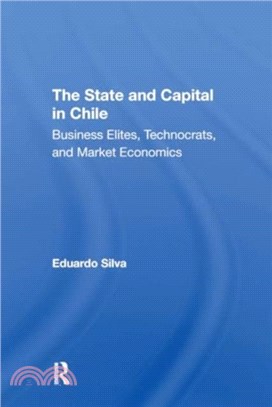
Originally published in 1996. Chile emerged from military rule in the 1990s as a leader of free market economic reform and democratic stability, and other countries now look to it for lessons in policy design, sequencing, and timing. Explanations for economic change in Chile generally focus on strong authoritarianism under General Augusto Pinochet and the insulation of policymakers from the influence of social groups, especially business and landowners. In this book Eduardo Silva argues that such a view underplays the role of entrepreneurs and landowners in Chile''s neoliberal transformation and, hence, their potential effect on economic reform elsewhere. He shows how shifting coalitions of businesspeople and landowners with varying power resources influenced policy formulation and affected policy outcomes. He then examines the consequences of coalitional shifts for Chile''s transition to democracy, arguing that the absence of a multiclass opposition that included captialists facilitated a political transition based on the authoritarian constitution of 1980 and inhibited its alternative. This situation helped to define the current style of consensual politics that, with respect to the question of social equity, has deepened a neoliberal model of welfare statism, rather than advanced a social democratic one.
外文書商品之書封,為出版社提供之樣本。實際出貨商品,以出版社所提供之現有版本為主。部份書籍,因出版社供應狀況特殊,匯率將依實際狀況做調整。
無庫存之商品,在您完成訂單程序之後,將以空運的方式為你下單調貨。為了縮短等待的時間,建議您將外文書與其他商品分開下單,以獲得最快的取貨速度,平均調貨時間為1~2個月。
為了保護您的權益,「三民網路書店」提供會員七日商品鑑賞期(收到商品為起始日)。
若要辦理退貨,請在商品鑑賞期內寄回,且商品必須是全新狀態與完整包裝(商品、附件、發票、隨貨贈品等)否則恕不接受退貨。











