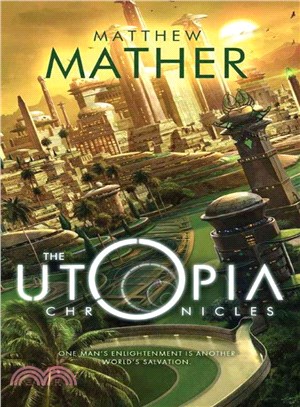
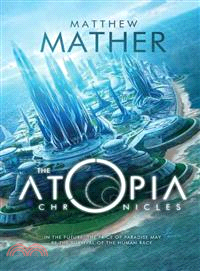
Robert Baxter once reveled in the intoxicating delights of Atopia—the man-made island where humans lose themselves in a world of boundless virtual realities. Now, Bob has returned to immerse himself i
The second book in the bestselling Atopia series. Cast out from Atopia, Robert Baxter undertakes a globe-trotting quest to find his friend Willy’s lost body, which just may hold the key to understandi
What could be worse than letting billions die?In the near future, to escape the crush and clutter of a packed and polluted Earth, the world’s elite flock to Atopia, an enormous corporate-owned artific
Ranciere (philosophy, University of Paris VIII) first published his little book in French in 1990. Here one meets, through the journey, the proletariat "in person," (something like what Mao meant when
Horowitz (philosophy, Vanderbilt U.) takes the subject of death in art in the work of Kant, Hegel, and Freud. He then examines the progress of the theme of memorialization in the art of Gerhard Richt
In arguing that Nietzsche's Thus Spoke Zarathustra is a philosophical explanation of the possibility of modernism, the author shows that literary fiction can do the work of philosophy.
Bypassing the attempt to place Nietzsche as a modern or postmodern philosopher, Gooding-Williams (philosophy and humanities, Northwestern U.) argues that the German philosopher treats modernism as a p
Riley (English and American studies, U. of East Anglia) investigates why the requirement to be something-or-other should be so hard to satisfy in a manner that is convincing to its subject. She conclu
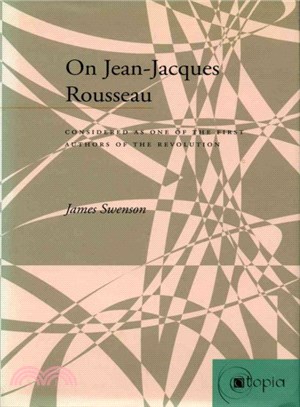
In order to grasp what it means to call Rousseau an "author" of the Revolution, as so many revolutionaries did, it is necessary to take full measure of the difficulties of literary interpretation to w
In order to grasp what it means to call Rousseau an "author" of the Revolution, as so many revolutionaries did, it is necessary to take full measure of the difficulties of literary interpretation to w