Excavations at Gilund provides a full analysis of the artifacts recovered during the five-year excavation conducted by the University of Pennsylvania and Deccan College. Their findings shed light on t
Some of the most dramatic new discoveries in Asia Minor have been made at Gordion, the Phrygian capital that controlled much of central Asia Minor for close to two centuries. The most famous ruler of
The pre-Columbian city we call Tikal was abandoned by its Maya residents during the tenth century A.D. and succumbed to the Guatemalan rain forest. It was not until 1848 that it was brought to the att
The New Chronology of Iron Age Gordion argues that the history and archaeology of the site of Gordion, in central Turkey, have been misunderstood since the beginning of the excavations in the 1950s. T
Report 27a on the artifacts of Tikal, this publication reports on goods used as markers of social status and in ritual. Moholy-Nagy (research associate, U. of Pennsylvania Museum) provides the evidenc
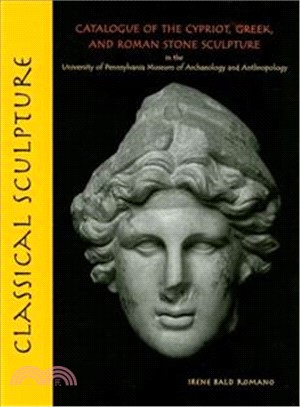
This first complete published catalogue of one of the most important classical sculpture collections in the United States includes 154 works from Italy, Greece, Cyprus, Asia Minor, North Africa, Roma
Intensive excavations in settlement areas within greater Tikal generated far more than an understanding of the complex gradations of social classes at this lowland Maya site. Identification of a speci
Presents the architecture and associated finds from 39 locations in Areas B, C, D, and F in the Minoan town of Pseira, the Bronze Age settlement off the coast of Crete that was excavated between 1985
The manuscript was essentially completed in 1989, reached the University of Pennsylvania Museum in 1991, was published in Russian in 1994, and received input from the author during the translation pro
V. Gordon Childe was the first scholar to attempt a broad and sustained socioeconomic analysis of the archaeology of the ancient world in terms that, today, could be called explanatory. To most, he wa
The Royal Cemetery at Tepe Marlik was excavated in one incredible 14-month season. The 53 intact tombs contained a fabulous array of precious metal vessels, jewelry, sculpture, weapons, and other arti
The Early Phrygian period is the first phase of Iron Age habitation on the City Mound of Yassihuyuk-Gordion. Since it is the most extensively excavated site in central Anatolia, not only for this earl
From 1973 through 1979, the University Museum sponsored investigations at Quirigua, a major lowland Maya site in eastern Guatemalan order to document the basic chronology, determine the nature and pat
Situated between Europe, Asia, and the Levantine corridor to Africa, the Zagros-Taurus region has enormous potential for the study of human adaptation and population movement during the Pleistocene. W
This volume focuses on the architectural development of the sanctuary from its foundation in the late seventh century B.C. to the end of the pre-Imperial Roman phase (31 B.C.). The main periods of san
Prehistoric Cypriot ceramics were widely traded, especially in the late Bronze Age, and constitute an important source of information about international trade and cultural relations in the Bronze and
Lang Rongrien Rockshelter was the first site excavated in Thailand to produce a clearly stratified, charcoal-dated late Pleistocene deposit beneath a well-defined Early Holocene Hoabinhian deposit. Th
Proceedings of a symposium held at the University of Pennsylvania Museum in January 1987. The primary objective of this symposium was to examine the diversity in data, methodologies, and interpretive
A critical transition period in the archaeology and history of Palestine—the Late Bronze Age and Early Iron Age—is described in detail from the perspective of a group of sites in the Baq'a
The pottery of Mohenjo-dara, one of the two major urban centers of the Indus Valley civilization (2500-2000 B.C.) is described and documented. The authors survey Harappan ceramic technology and style,
According to Herodotus, Cyrene was colonized by settlers from the island of Thera, later joined by other colonists from Crete, Samos, Laconia, and Rhodes. Traditionally the foundation date has been se
Any consideration of the Iranian plateau must include the important site of Hasanlu in northern Iran. The Museum carried out excavations from 1956 through 1977. A major aspect of the research focused
The publication of this book finally places the exquisitely carved but little known monuments of Caracol with those of Quirigua, Copan, and Tikal. New breakthroughs in the decipherment of Maya text ha
G. M. FitzGerald's Deep Cut at Beth Shan, a large-scale research project in the southern Levant, is a window to the earliest civilization at this major tell, documenting human activity during the Neol
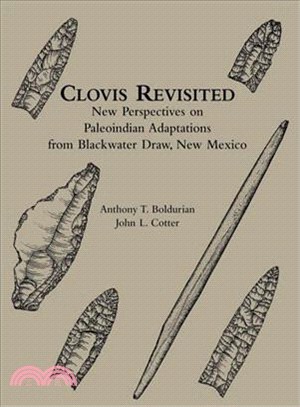
Explore the early days of Paleoindian archaeology in this engaging retrospective of Edgar B. Howard's Southwest Early Man Project, 1929-1937, cosponsored by the University Museum and the Academy of N
The ancient remains at Haft Tepe (the ancient name of the site is unknown) lie on the plain of Khuzistan in southwestern Iran close to the ruins of ancient Susa. Excavations under the directorship of
Any consideration of the Iranian plateau must include the important site of Hasanlu in northern Iran. The Museum carried out excavations from 1956 through 1977. A major aspect of the research focused
With an extensive summary of previous research on this Bering Sea coastal site, the author discusses six main phases of occupation, dating from 2000 B.C. to the modern era, and attempts to answer ques