Minority Religions under Irish Law focuses the spotlight specifically on the legal protections afforded in Ireland to minority religions, generally, and to the Muslim community, in particular.
The edited volume Both Muslim and European: Diasporic and Migrant Identities of Bosniaks scrutinizes some of the new aspects of the Bosniak history and identity and connects them with the experience o
Observing Islam in Spain pools multidisciplinary research experiences on Islam, providing original and explanatory findings on the social processes that have developed in recent decades around the so-
In Dar al-Islam Revisited, Sarah Albrecht explores how the Islamic legal tradition of dividing the world into the “territory of Islam” and other geo-religious categories is reinterpreted today and how
In Exploring the Multitude of Muslims in Europe, the fourteen collected articles present conceptualisations, productions and explorations of the multitudes of Muslims in Europe, echoing and honouring
In Governing Muslims and Islam in Contemporary Germany Luis Manuel Hernández Aguilar critically analyzes the institutionalization of the German Islam Conference and the different projects this institu
In Islamic Leadership in the European Lands of the Former Ottoman and Russian Empires the development of national muftiates is presented through a double prism of the institutional structures of Musli
In A History of Conversion to Islam in the United States, Volume 2: The African American Islamic Renaissance, 1920-1975 Patrick D. Bowen offers an account of the diverse roots and manifestations of Af
In Home and Migrant Identity in Dialogical Life Stories of Moroccan and Turkish Dutch, Femke J. Stock explores the multivoiced life stories of Moroccan and Turkish Dutch. Using Dialogical Self Theory
In Shari?a Councils and Muslim Women in Britain Tanya Walker draws on extensive fieldwork to radically reshape the public understanding of the Shari?a councils and the motivations of Muslim women who
Marmaduke Pickthall: Islam and the Modern World makes an important contribution to the field of Muslims in Europe in the first half of the twentieth century. This volume of essays marks eighty years s
For centuries Muslim Tatars have been part of the ethnic mosaic of the Baltic region, and scholars from the region present a rarely told narrative with insights into a cultural history that deserves t
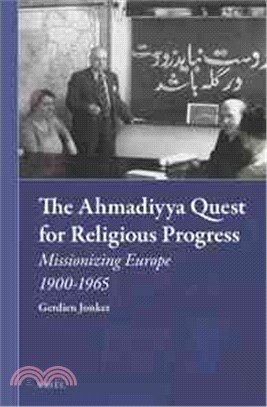
In The Ahmadiyya Quest for Religious Progress. Missionizing Europe 1900 – 1965 Gerdien Jonker offers an account of the mission the Muslim reform movement of the Ahmadiyya undertook in interwar Europe.
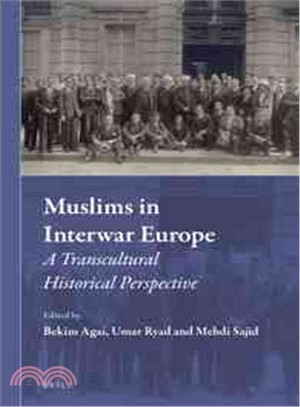
This title will be available online in its entirety in Open Access.InMuslims in Interwar Europe, various contributors argue that Muslims constituted a group of engaged actors in the European and inter
In A History of Conversion to Islam in the United States, Volume 1: White American Muslims before 1975, Patrick D. Bowen offers an account of white Muslims and Sufis and the movements they produced be
This book explores which factors facilitate or hinder effective Muslim political representation in Britain, and how representation styles of Muslim elected officials shape these factors.
In this book the contributors analyse the ways in which the Senegalese, Ghanaian and Fulbe migrants in France, Spain, the Netherlands, Germany and Switzerland negotiate their religious and ethnic iden
The Religious Identity of Young Muslim Women in Berlin offers an in-depth ethnographic account of Muslim youth’s religious identity formation and their everyday life engagement with Islam. It deals wi
"The Minority Concept in the Turkish Context" discusses the concept of minority in the specific Turkish context by using three different case studies: religious minorities in Turkey, Muslims of Greece
In "Organizing Muslims and Integrating Islam in Germany," Kerstin Rosenow-Williams analyzes the challenges faced by Islamic organizations in Germany since the beginning of the 21st century. Outlining
Social scientists in Europe, Turkey, and Australia explore perception and public representations of Islam and Muslims at a time when international and national contexts make those identifications ines
Jacobsen (social anthropology, University of Bergen) spent several months getting to know members of two Muslim youth groups in Bergen. Both of these were founded by the young adults and are not under
The data set that forms the basis for this study by Cressey (U. of Birmingham, UK) consists of interviews exploring the life stories of thirty British-born Pakistani and Kashmiri young people about th
Many studies of transnationalism among Muslims in Europe stress patterns of migration and shared ethnic identity. The 12 papers presented by Allievi (sociology, U. of Padua, Italy) and Nielsen (Islami
Social scientists sketch the main characteristics of European Islam, primarily as it has developed since the late 1950s when immigrants began arriving in Europe in greater numbers from Islamic countri