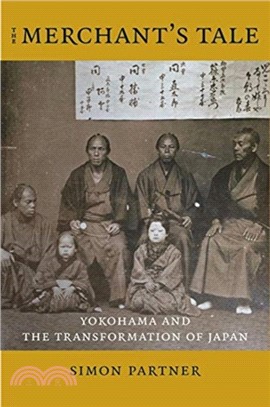
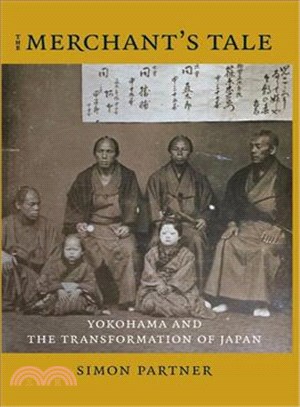
In April 1859, at age fifty, Shinohara Chuemon left his old life behind. Chuemon, a well-off farmer in his home village, departed for the new port city of Yokohama, where he remained for the next four
This book reveals the ways in which seventeenth-century poets used models of vision taken from philosophy, theology, scientific optics, political polemic and the visual arts to scrutinize the nature o
In April 1859, at age fifty, Shinohara Chuemon left his old life behind. Chuemon, a well-off farmer in his home village, departed for the new port city of Yokohama, where he remained for the next four
Aizawa Kikutaro (1866-1963) was born into the wealthiest family in Hashimoto, a small agricultural village specializing in wheat and silk. By 1925, the village was undergoing rapid commercial developm
Sakaue Toshie was born on August 14, 1925, into a family of tenant farmers and day laborers in the hamlet of Kosugi. The world she entered was one of hard labor, poverty, dirt, disease, and frequent e
Assembled in Japan investigates one of the great success stories of the twentieth century: the rise of the Japanese electronics industry. Contrary to mainstream interpretation, Simon Partner discovers
What makes a war "holy," and who decides that it is? God ofBattles examines the origins of holy war, and how it affectsthe modern world. Peter Partner shows how the ideal of the crusade,"God's War," c
Bound by religious vows of poverty, chastity, and obedience, the Knights Templar were a Military Crusading Order engaged in religious war in the Holy Land. At the end of the thirteenth century, after
"Peter Partner is an established scholar, qualified by his research on The Papal State Under Martin Vand The Lands of St. Peterto write this general book on Renaissance Rome. The titles of the chapter
Written by a leading practitioner in the field, The Law of TUPE Transfers offers a concise, practical treatment of the current transfer of undertakings legislation in the UK, and is an invaluable gui
In recent times postmodernism has influenced all areas of the humanistic disciplines, challenging our most fundamental assumptions about the meaning of historical evidence and our ability to read and
"The book recounts the postwar history of one of the South's fastest-growing communities through the eyes of one of its most disadvantaged residents. In the process, the book attempts to shed light on