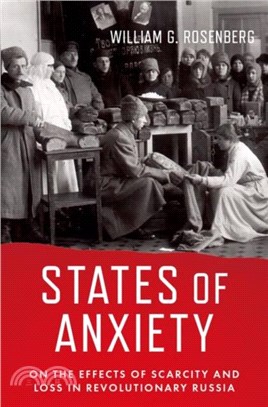
Amidst the vast literature on the parties and politics of revolutionary Russia and its near constant appropriation for presentist purposes over the years, States of Anxiety assesses the effects of the great scarcities and enormous losses that Russia experienced between 1914 and 1921, a period of dramatic civil conflicts and Russia's “long World War.” Scarcities meant not only the deficits of necessary goods like food, but also their accompanying anxieties and fears. Using archival documents and materials of the period almost exclusively, this study explores how the tsarist, democratic liberal, democratic socialist, and Bolshevik regimes all addressed the forms and effects of scarcity and loss in ways they hoped would assure the revolutionary outcomes of their own historical imaginations. Looking closely at their efforts, it suggests how and why each failed to do so. Approaching the Russian revolutionary period in these terms involves exploring a broad range of connected issues. Mater