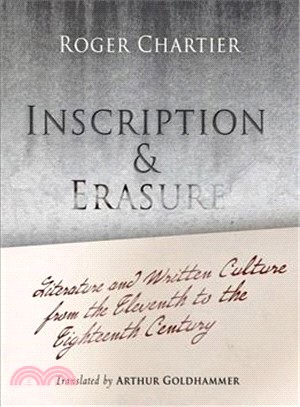
In this provocative work, Roger Chartier continues his extraordinarily influential consideration of the forms of production, dissemination, and interpretation of discourse in Early Modern Europe. Char
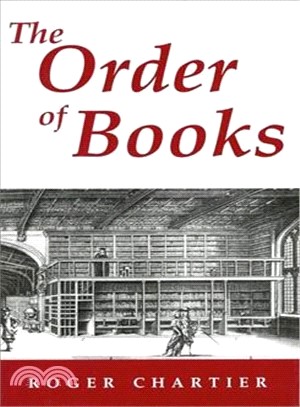
Between the end of the Middle Ages and the eighteenth century, what methods were used to monitor and control the increasing number of texts—from the early handwritten books to the later, printed volum
The fear of oblivion obsessed medieval and early modern Europe. Stone, wood, cloth, parchment, and paper all provided media onto which writing was inscribed as a way to ward off loss. And the task was
Between the end of the Middle Ages and the eighteenth century, what methods were used to monitor and control the increasing number of texts—from the early handwritten books to the later, printed volum
Readers interested in history, and in the development of the modern sensibility, will relish this large-scale yet intimately detailed examination of the blossoming of the ordinary and extraordinary pe
France has long attracted the attention of many of America's most accomplished historians. The field of French history has been vastly influential in American thought, both within the academy and beyo
Books and other texts have not always been read in the way that we read them today. The modern practice of reading -- privately, silently, with the eyes alone -- is only one way of reading, which for

To whom does a painted tablet—a tabula picta—belong? To the owner of the physical piece of wood on which an image is painted? Or to the person who made the painting on that piece o

In a provocative attempt to outline a history of communication during the Spanish Golden Age, Communication, Knowledge, and Memory in Early Modern Spain examines how speech, visual images, and written
Reknowned historian Roger Chartier, one of the most brilliant and productive of the younger generation of French writers and scholars now at work refashioning the Annales tradition, attempts in this
The leading historians who are the authors of this work offer a highly original account of one of the most important transformations in Western culture: the change brought about by the discovery and d
In Early Modern Europe the first readers of a book were not those who bought it. They were the scribes who copied the author’s or translator’s manuscript, the censors who licensed it, the
How should we read a text that does not exist, or present a play the manuscript of which is lost and the identity of whose author cannot be established for certain?Such is the enigma posed by Carden


In this book Roger Chartier and his associates explore the history of a cultural practice that has become common and widespread: the writing of letters. They begin by examining the inventi