". . . a well-researched and thoughtful inquiry into the circumstances and social forces producing one of the most violent of twentieth-century American race riots."
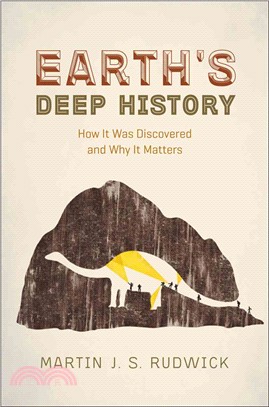
Earth has been witness to mammoths and dinosaurs, global ice ages, continents colliding or splitting apart, and comets and asteroids crashing catastrophically to the surface, as well as the birth of h
Earth has been witness to mammoths and dinosaurs, global ice ages, continents colliding or splitting apart, comets and asteroids crashing catastrophically to the surface, as well as the birth of human
In the late eighteenth and early nineteenth centuries, scientists reconstructed the immensely long history of the earth—and the relatively recent arrival of human life. The geologists of the period, m
In the late eighteenth and early nineteenth centuries, scientists reconstructed the immensely long history of the earth—and the relatively recent arrival of human life. The geologists of the period, m
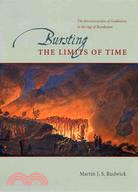
During a revolution of discovery in the late eighteenth and early nineteenth centuries, geologists reconstructed the immensely long history of the earth—and the relatively recent arrival of human life
In a relatively brief period of revolutionary discovery in the late eighteenth and early nineteenth centuries, geologists reconstructed the immensely long history of the earth - and the relatively rec
Rudwick (emeritus, history of science, U. of Cambridge, UK) collects 14 of his published articles on the history of the natural sciences. The central concerns that has animated his work since he moved
French zoologist Georges Cuvier (1769-1832) helped form and bring credibility to geology and paleontology. Here Martin J. S. Rudwick provides the first modern translation of Cuvier's essential writing
How did the earth look in prehistoric times? Scientists and artists collaborated during the half-century prior to the publication of Darwin's Origin of Species to produce the first images of dinosaur
Over 100 lithographs and engravings from the 18th and 19th centuries, many seen for the first time since their original publication, and excerpts from the texts that accompanied them, show how scienti
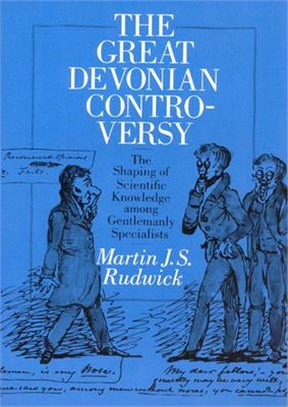
"Arguably the best work to date in the history of geology."—David R. Oldroyd,Science"After a superficial first glance, most readers of good will and broad knowledge might dismiss [this
"It is not often that a work can literally rewrite a person's view of a subject. And this is exactly what Rudwick's book should do for many paleontologists' view of the history of their own field."—St
Along the Color Line is a diverse collection of essays by two of the most accomplished historians of the modern African American experience, first published more than a quarter of a century ago. A rob
This book presents an interdisciplinary perspective on the large-scale processes of socio-economic and political change of two "young" democracies: post-apartheid South Africa and th
Until recently, Cuvier (1769-1832) has been remembered chiefly for being on the losing side of two great scientific debates: he opposed the biological theory of evolution, and he championed the geolog
As important to modern world views as any work of Darwin, Marx, or Freud, Lyell's Principles of Geology has never before been available in paperback. In this third and final volume, Charles Lyell (17
In a scholarly career spanning five decades, Rhoda Rappaport published perceptive analyses of science in the culture of early Modern Europe, France in particular, with strong emphasis on geology's ear
In this work of social and labor history, the late authors (both former professors of history at Kent State U.) documented how the black community of Detroit shifted its orientation over time from the