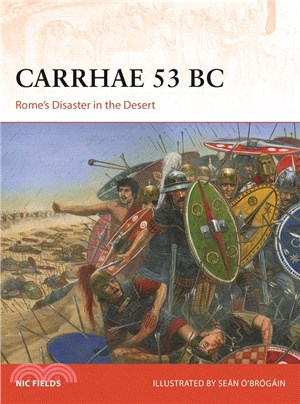
This study explores the critical battle of Carrhae, a fascinating tale of treachery, tactics, and topography in which Rome experienced one of its most humiliating defeats.Carrhae is a battle from a heady moment in Roman history – that of the clever carve-up of power by the First Triumvirate of Julius Caesar, Pompey the Great and Marcus Licinius Crassus (the Roman general who had famously put down the Spartacan revolt). Crassus had begun his second consulship (55 BC) with the express aim of going to war with Parthia, and desperately felt the need to gain military glory and popular acclaim to balance that of his two triumvirate rivals. In June 53 BC, he led seven legions, 4,000 lightly armed troops and 4,000 horsemen across the Euphrates, and though soon deserted by his Armenian allies, Crassus continued his advance into unfamiliar, hostile territory. At Carrhae (present-day Harran, Turkey), the scene was set for a Roman military disaster on an epic scale.Classical scholar Nic Fields des