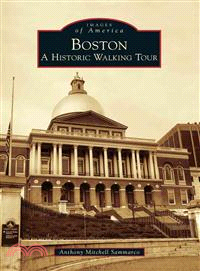
Oliver Wendell Holmes coined the Massachusetts State House as the "Hub of the Universe." In Boston: A Historic Walking Tour, readers are guided on a series of downtown walking tours that radiate out f
Hyde Park, the last town annexed to Boston in 1912, was founded in 1868 from sections of Dorchester, Milton, and Dedham. For decades, Hyde Park thrived in proximity to the city while offering a bucoli
Laid out in 1848 as a rural garden cemetery by Henry A. S. Dearborn, Forest Hills Cemetery celebrates its 160th anniversary in 2008 as Boston's premier arboretum cemetery. Since the mid-19th century,
The ease of transportation via the Old Colony Railroad revolutionized Dorchester in the period between 1850 and the Civil War and brought a residential building boom that lasted the next seven decades
Milton chronicles the tremendous changes that have taken place in this town in the last century. Originally a part of Dorchester, Milton was incorporated as an independent town in 1662. For more than
Sometimes called the Eden of America, Jamaica Plain has a rich and colorful history reaching back to pastoral roots in the seventeenth century. Some say the neighborhood was named during the heyday of
West Roxbury, located along the scenic Charles River, is a community of tree-lined streets and panoramic views, which has undergone tremendous changes since its incorporation as a town in 1851. Former
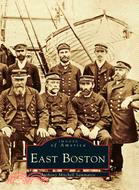
Originally called Noodle's Island, East Boston was once comprised of five islands connected by marshland. Today, many people identify East Boston as the location of Logan International Airport, but it
South Boston, a peninsular extension of the Massachusetts mainland, was originally dubbed "Great Neck" by the Puritans who settled Dorchester in 1630. After the year 1804, when the town of South Bosto
Originally a narrow, barren strip of land known as the Neck, Boston's South End grew from a lonely sentry post and execution grounds to what is today the largest Victorian neighborhood in the United S
The Back Bay was one of Boston's premier residential neighborhoods between 1837 and 1901. From its quagmire beginnings and with the creation of the Boston Public Garden in the 1830s, the Back Bay was
Once referred to as the "Suburb Superb," Roslindale was at one time part of the town of West Roxbury, which had been set off from Roxbury in 1851. The rapid development of Roslindale
Jamaica Plain: Then & Now is a fascinating photographic history of a Boston neighborhood once referred to as the "Eden of America." At one time a part of Roxbury and later West Roxbury, Jamaica Pl
Once a part of Charlestown that could only be reached via "The Neck" (present-day Sullivan Square), Somerville became accessible from Boston with the construction of the Middlesex Canal and the extens
Boston's financial district is considered the heart of New England's banking and finance. It is a veritable overlay of sleek modern office buildings and elegant high-rise structures of the early twent
Visit territory such as the House of Reformation at City Point and the Home for the Feeble-minded at City Point. Explore the Perkins Institute for the Blind, relocated in the formerMount Washington Ho
Settled as New Towne in 1631, Cambridge was referred to by Wood, a seventeenth-century chronicler, as "one of the neatest and best compacted towns in New England." The founding of Harvard College in 1
In Dorchester Volume II, local author Anthony Mitchell Sammarco continues his detailed look at this diverse town that he began in Volume I, which the Boston Globe hailed as a best-seller. Founded in 1
Referred to in its beginning as a "peculiar town," Medford was originally a town but a plantation owned by Governor Matthew Craddock. Known as Meadford at the time of its settlement in 1630, the area
Within these pages, author Anthony Mitchell Sammarcobrings to life the history of Boston's West End--thearea of the city bound by the Charles River and Storrow Drive as well as North Station, City Hal
One of the largest development projects in nineteenth-century America, Boston's Back Bay was essentially a tidal basin until the construction of the Mill Dam (present-day Beacon Street) just after the
Few events can be said to have changed the face of Boston forever. Eventually destroying 775 buildings and causing millions of dollars in damage to the commercial section that we now know as Boston's
Settled in 1630, Roxbury, Massachusetts, became one of the most affluent towns in Colonial America. Throughout the seventeenth and eighteenth centuries, Roxbury was the only point of access by land to
With Roslindale, Boston historian Anthony Mitchell Sammarco chronicles the development and evolution of this historic Boston neighborhood in over two hundred black-and-white images coupled with detail
Dorchester was settled in 1630 by Puritans from England, and for over two hundred years it remained a small farming community. However, the arrival of the Old Colony Railroad brought first a flood of