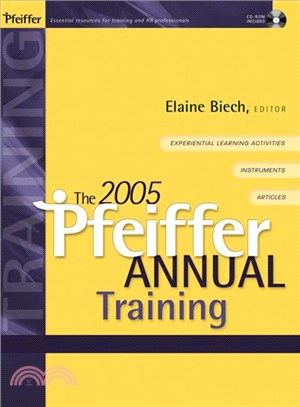
The 2009 Pfeiffer Annual: Training offers a hands-on guide to the latest thinking and recent approaches to training and development. This year's Annual presents a "talent management" theme. The contri
This volume of the popular Pfeiffer Annuals series offers unique activities, articles, and an instrument from experts and practitioners in the field of managerial training. It addresses the design, de
Kick up your training sessions a notch! If you want to make group learning more fun and effective, this is the resource for you. Training expert Elaine Biech, author of Training for Dummies, challenge
The Annual is divided into four sections: Experiential Learning Activities (ELAs); Editor's Choice; Inventories, Questionnaires, and Surveys; and Articles and Discussion Resources. The 2008 Training A
The 2013 Pfeiffer Training AnnualThe Leader in Resources for Training & HR Professionals for the Past Four Decades Experiential Learning Activities Instruments Articles For more than 40 years, The P
The 2012 Pfeiffer Training AnnualThe Leader in Resources for Training & HR Professionals for the Past Four Decades For 40 years, The Pfeiffer Annuals have helped professionals in the workplace learnin
This set contains both The 2010 Pfeiffer Annual: Training and The 2010 Pfeiffer Annual: Consulting.Purchase includes access to an associated website which features customizable versions of the reprodu
Shifting work patterns, constant organizational change, and a continually increasing demand for new knowledge, challenges even the most experienced training professional. Under these conditions, prove
Shifting work patterns, constant organizational change, and a continually increasing demand for new knowledge, challenges even the most experienced training professional. Under these conditions, prove
Shifting work patterns, constant organizational change, and a continually increasing demand for new knowledge, challenges even the most experienced training professional. Under these conditions, prove
Shifting work patterns, constant organizational change, and a continually increasing demand for new knowledge, challenges even the most experienced training professional. Under these conditions, prove