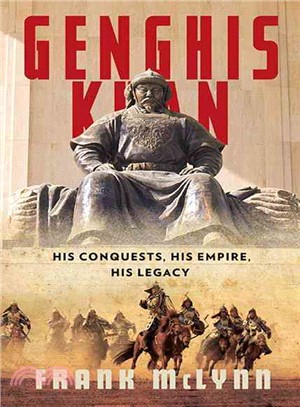
Genghis Khan was by far the greatest conqueror the world has ever known, whose empire stretched from the Pacific Ocean to central Europe, including all of China, the Middle East and Russia. So how did
Profiles the famous navigator, addresses the common colonialist misconceptions about the explorer and his death, and re-creates the voyages that took him from his native England to the outer reaches o
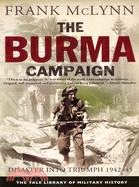
This book, in essence a quadruple biography, tells the story of the four larger-than-life Allied commanders whose lives collided in the Burma campaign, one of the most punishing and protracted militar
This book, in essence a quadruple biography, tells the story of the four larger-than-life Allied commanders whose lives collided in the Burma campaign, one of the most punishing and protracted militar
The age of discovery was at its peak in the eighteenth century, with heroic adventurers charting the furthest reaches of the globe. Foremost among these explorers was navigator and cartographer Capta
Author McLynn explores the Promethean legend from his Corsican roots, through the chaotic years of the French Revolution and his extraordinary military triumphs, to the coronation in 1804, to his fata
Marcus Aurelius (121180 AD) is one of the great figures of antiquity whose life and words still speak to us today. His Meditations remains one of the most widely read books from the classical w
Marcus Aurelius (121–180 AD) is one of the great figures of antiquity who still speaks to us today, more than two thousand years after his death. His Meditations has been compared by John Stuar
Legend and lore surround the history of kings Richard and John, from the ballads of Robin Hood and the novels of Sir Walter Scott to Hollywood movies. Frank McLynn has returned to the original source
Legend and lore surround the history of kings Richard and John, from the ballads of Robin Hood and the novels of Sir Walter Scott to Hollywood movies and television. In the myth-making, King Richard,
If not for the events of 1759, the entire history of the world would have been different. Called the "Year of Victories," 1759 was the fourth year of the Seven Years, or the French-and-Indian War and
A year-by-year narrative of the pioneer overland migration to Oregon and California between 1840 and 1849 includes coverage of the opening of trails, role of women, relationships with Native Americans
Recounting the decade of bloody events that followed the eruption of the Mexican Revolution in 1910, Villa and Zapata explores the regional, international, cultural, racial, and economic strife that
McLynn provides the first comprehensive view of crime and its consequences in the eighteenth century: why was England notorious for violence? Why did the death penalty prove no deterrent? Was it a cru
Mongol leader Genghis Khan was a mighty warrior, more powerful even than Alexander the Great or Napoleon. He successfully waged war on two fronts simultaneously while also conquering Russia in winter.