Inspired by the trial of a bureaucrat who helped cause the Holocaust, this radical work on the banality of evil stunned the world with its exploration of a regime's moral blindness and one man's insis
A work of striking originality bursting with unexpected insights, The Human Condition is in many respects more relevant now than when it first appeared in 1958. In her study of the state of modern hu
Hannah Arendt's definitive work on totalitarianism and an essential component of any study of twentieth-century political history The Origins of Totalitarianism begins with the rise of anti-Semitism
The past year has seen a resurgence of interest in the political thinker Hannah Arendt, “the theorist of beginnings,” whose work probes the logics underlying unexpected transformations&mda
'How could such a book speak so powerfully to our present moment? The short answer is that we, too, live in dark times' Washington Post Hannah Arendt's chilling analysis of the conditions that led to
Hannah Arendt's penetrating observations of the modern world, based on a profound knowledge of the past, have been fundamental to our understanding of the political landscape.
A unique selection of the most significant interviews given by Hannah Arendt, including the last she gave before her death in 1975. Some are published here in English for the first time.Arendt was one
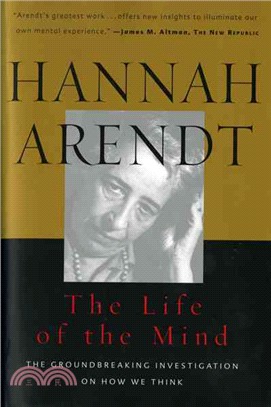
The author’s final work, presented in a one-volume edition, is a rich, challenging analysis of man’s mental activity, considered in terms of thinking, willing, and judging. Edited by Mary McCarthy; In
A collection of studies in which Arendt, from the standpoint of a political philosopher, views the crises of the 1960s and early 1970s as challenges to the american form of government. Index.
An analysis of the nature, causes, and significance of violence in the second half of the twentieth century. Arendt also reexamines the relationship between war, politics, violence, and power. “
This middle volume focuses on the curious and cruel epoch of declining European colonial imperialism from 1884 to the outbreak of the First World War in 1914. Index.
The first volume of Arendt’s celebrated three-part study of the philosophical origins of the totalitarian mind. This volume focuses on the rise of antisemitism in Europe in the late nineteenth
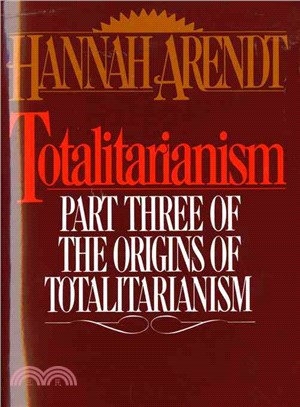
In the final volume, Arendt focuses on the two genuine forms of the totalitarian state in history-the dictatorships of Bolshevism after 1930 and of National Socialism after 1938. Index.