"The fiftieth anniversary edition of John Updike's collection of semi-autobiographical stories about a small Pennsylania town, first published in paperback in 1964 and now in hardcover for the first t
To complement his work as a fiction writer, John Updike accepted any number of odd jobs—book reviews and introductions, speeches and tributes, a “few paragraphs” on baseball or beauty or Borges—and sa
The Coup describes violent events in the imaginary African nation of Kush, a large, landlocked, drought-ridden, sub-Saharan country led by Colonel Hakim Felix Ellellou. (“A leader,” writes Colonel Ell
On September 28, 1960-a day that will live forever in the hearts of fans-Red Sox slugger Ted Williams stepped up to the plate for his last at-bat in Fenway Park. Seizing the occasion, he belted a sol
In 1956, Updike published a story, "Snowing in Greenwich Village," about a young couple, Joan and Richard Maple, at the beginning of their marriage. Over the next two decades, he returned to these ch
*注意:此書為POD (Print on Demond)少量印製。 In a small Pennsylvania town in the late 1940s, schoolteacher George Caldwell yearns to find some meaning in his life. Alone with his teenage son for three days in a
John Updike's twenty-second novel tells of eighteen-year-old Ahmad Ashmawy Mulloy and his devotion to Allah and the words of the Holy Qur'an, as expounded to him by a local mosque's imam.The son of a
Winner of the PEN/Faulkner Award for Fiction ? A harvest and not a winnowing, this volume collects 103 stories, almost all of the short fiction that John Updike wrote between 1953 and 1975. “How rarel
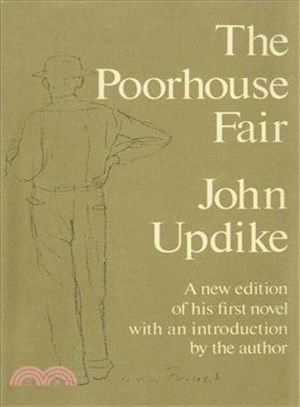
The hero of John Updike’s first novel, published when the author was twenty-six, is ninety-four-year-old John Hook, a dying man who yet refuses to be dominated. His world is a poorhouse—a county home
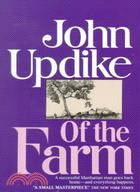
In this short novel, Joey Robinson, a thirty-five-year-old New Yorker, describes a visit he makes, with his second wife and eleven-year-old stepson, to the Pennsylvania farm where he grew up and where
Basic Bech combines two classic titles -- Bech: A Book and Bech is Back -- from one of John Updike's most beloved characters. Henry Bech, the celebrated author of Travel Light, has been scrutinized, c
In this follow-up to Bech: A Book, Henry Bech, the priapic, peripatetic, and unproductive Jewish American novelist, returns with seven more chapters from his mock-heroic life. He turns fifty in a conf
Set in the near future of 2020, this disconcerting philosophical fantasy depicts an America devastated by a war with China that has left its populace decimated, its government a shambles, and its natu
Marry Me is subtitled “A Romance” because, in the author’s words, “people don’t act like that anymore.” The time is 1962, and the place is a fiefdom of Camelot called Greenwood, Connecticut. Jerry Con
In this antic riff on Hawthorne’s Scarlet Letter, the Reverend Tom Marshfield, a latter-day Arthur Dimmesdale, is sent west from his Midwestern parish in sexual disgrace. At a desert retreat dedicated
The Coup describes violent events in the imaginary African nation of Kush, a large, landlocked, drought-ridden, sub-Saharan country led by Colonel Hakim Felix Ellellou. (“A leader,” writes Colonel Ell
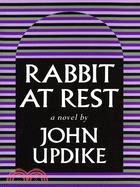
Ex-basketball player Harry "Rabbit" Angstrom, now living in a Florida condominium, faces middle age, heart trouble, and a wife who has suddenly gone to work
In this short novel, Joey Robinson, a thirty-five-year-old New Yorker, describes a visit he makes, with his second wife and eleven-year-old stepson, to the Pennsylvania farm where he grew up and where
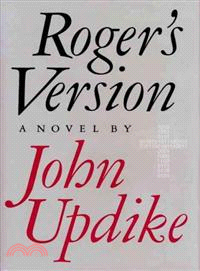
A born-again computer whiz kid bent on proving the existence of God on his computer meets a middle-aged divinity professor, Roger Lambert, who'd just as soon leave faith a mystery. Soon the computer h
In Greenwood, Connecticut, during the period of the Kennedy administration, Jerry and Sally, both married, have an affair charged with doubts, subtle intensities, and a deep sense of caring
Stories that trace the decline and fall of a marriage, a history made up of the happiness of growing children and shared life, and the sadness of growing estrangement and the misunderstandings of love
The Coup describes violent events in the imaginary African nation of Kush, a large, landlocked, drought-ridden, sub-Saharan country led by Colonel Hakim Felix Ellellou. (“A leader,” writes Colonel Ell
THE POORHOUSE FAIR was John Updike's first full length novel, published four years after he graduated from Harvard. It concerns the events surrounding a fair put on by members of a poorhouse and is an
In this antic riff on Hawthorne’s Scarlet Letter, the Reverend Tom Marshfield, a latter-day Arthur Dimmesdale, is sent west from his Midwestern parish in sexual disgrace. At a desert retreat dedicated
Tristao Raposo, a nineteen-year old black child of the Rio slums, spies Isabel Leme, an eighteen-year-old upper-class white girl, across the hot sands of Copacabana Neach, and presents her with a ring
Ben Turnbull is a 66 year-old retired investment consultant living north of Boston in the year 2020. A recent war between the United States and China has thinned the population and brought social chao
When a history professor - Alfred Clayton - is asked to record his impressions of the Ford Administration, he recalls a turbulent piece of personal history as well: his unfinished book on 19th-century
Concerns a month of seven days, a month of enforced rest and recreation as experienced by the Reverend Tom Marshfield, sent west from his Midwestern church in disgrace.
Roger Lambert, a professor of Divinity at a New England university is convinced that religious belief can only be justified by recourse to pure faith. But when his wife flings herself into an affair w
Fifty-six and overweight, Harry Rabbit Angstrom has a struggling business on his hands and a heart that is starting to fail. His family, too, is giving him cause for concern. His son is a wreck of a m
To the list of John Updike’s well-intentioned protagonists—Rabbit Angstrom, Richard Maple, Henry Bech—add James Buchanan, the harried fifteenth president of the United States (1857–1861). In what the
In John Updike’s second collection of assorted prose he comes into his own as a book reviewer; most of the pieces picked up here were first published in The New Yorker in the 1960s and early ’70s. If
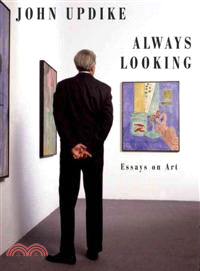
In this posthumous collection of John Updike’s art writings, a companion volume to the acclaimed Just Looking (1989) and Still Looking (2005), readers are again treated to “remarkably elegant essays”
John Updike’s first collection of nonfiction pieces, published in 1965 when the author was thirty-three, is a diverting and illuminating gambol through midcentury America and the writer’s youth. It op