Gertrude and Claudius are the “villains” of Hamlet: he the killer of Hamlet’s father and usurper of the Danish throne; she his lusty consort, who marries Claudius before her late husband’s body is col
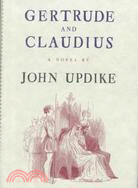
John Updike's nineteenth novel tells the story of Claudius and Gertrude, King and Queen of Denmark, before the action of Shakespeare's Hamlet begins. Employing the nomenclature and certain details of
*注意:此書為POD (Print on Demond)少量印製。 Using details from the ancient Scandinavian legends that were the inspiration for "Hamlet", this tale brings to life Gertrude's girlhood as the daughter of King Rorik
John Updike's first collection of verse since his Collected Poems, 1953-1993 brings together fifty-eight poems, three of them of considerable length. The four sections take up, in order: America, its
In a world where directional signs are unreadable, men and women on the move deal with such problems as marriage, divorce, prostitution, leprosy, extinct mammals, guilt, and getting in and out of Ethi
To complement his work as a fiction writer, John Updike accepted any number of odd jobs—book reviews and introductions, speeches and tributes, a “few paragraphs” on baseball or beauty or Borges—and sa
“A drop of truth, of lived experienced, glistens in each.” This is how John Updike modestly described his nonfiction pieces, of which Due Considerations is perhaps his most varied, stylish, and person
John Updike’s sixth collection of essays and literary criticism opens with a skeptical overview of literary biographies, proceeds to five essays on topics ranging from China and small change to faith
In this collection of nonfiction pieces, John Updike gathers his responses to nearly two hundred invitations into print, each “an opportunity to make something beautiful, to find within oneself a trea
To the hero of the title story of this collection, all of England has the glow of an afterlife: “A miraculous lacquer lay upon everything, beading each roadside twig . . . each reed of thatch, each ti
When this classic collection of stories first appeared—in 1962, on the author’s thirtieth birthday—Arthur Mizener wrote in The New York Times Book Review: “Updike is a romantic [and] like all American
To Carter Billings, the hero of John Updike's title story, all of England has the glow of an afterlife: "A miraculous lacquer lay upon everything, beading each roadside twig, each reed of thatch in th
WHEN, five years and five books of fiction ago, THE CARPENTERED HEN, John Updike’s first collection of verse, was published, Phyllis McGinley wrote: “I have been happily reading Mr. Updike in The New
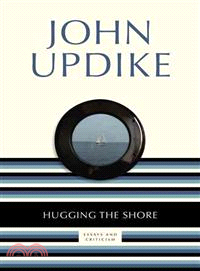
WINNER OF THE NATIONAL BOOK CRITICS CIRCLE AWARD “Writing criticism is to writing fiction and poetry as hugging the shore is to sailing in the open sea,” writes John Updike in his Foreword to this c
"A haunting collection of heart-wrenching narratives...The evocative nature of the stories in My Father's Tears echoes the melancholy of Chekhov, the romanticism of Wordsworth and the mournful spirit
John Updike’s first collection of new short fiction since the year 2000, My Father’s Tears finds the author in a valedictory mood as he mingles narratives of his native Pennsylvania with stories of Ne
A stunning collection of poems that John Updike wrote during the last seven years of his life and put together only weeks before he died for this, his final book.The opening sequence, “Endpoint,” is m
The dozen short stories in John Updike's new collection revisit many of the locales of his fiction: the small Pennsylvania town of Olinger, the lonely farm to which the hero moves as an adolescent, th
In the boldly eclectic title poem of his collection, John Updike employs the meters of Dante, Spenser, Pope, Whitman, and Pound, as well as the pictographic tactics of concrete poetry, to take an inve
Review"Brilliant and poignant...By his compassion, clarity of insight and crystal-bright prose, he makes Rabbit's sorrow his and our own."--The Washington Post -- Review"Brilliant and poignant...By hi
Stories that trace the decline and fall of a marriage, a history made up of the happiness of growing children and shared life, and the sadness of growing estrangement and the misunderstandings of love
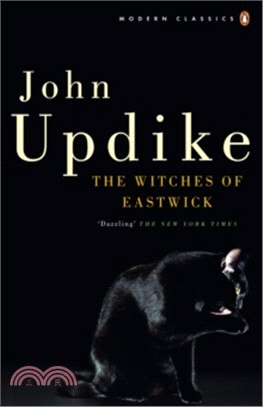
The air of Eastwick breeds witches - women whose powerful longings can stir up thunderstorms and fracture domestic peace. Jane, Alexandra and Sukie, divorced and dangerous, have formed a coven. Into t
Owen Mackenzie's life story abounds with sin and seduction, domesticity and debauchery. His marriage to his college sweetheart is quickly followed by his first betrayal and he embarks upon a series of
Henry Bech, the celebrated author of "Travel Light", has been scrutinized, canonized and vilified by critics and readers across the world. This work explores the writing life and what happens when a w
In this wry novel of sentimental education and sexual pursuit, we follow Owen Mackenzie, a representative man of the author’s generation, from cradle to grave, and from bed to bed. His life and relati
Trista+a1o, an African-Brazilian street kid, and Isabel, an upper-class teen fresh from convent school, fall in love and flee from her rich father and the toughs he has sent in pursuit of them. Simult
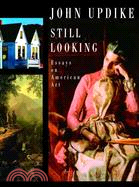
After beginning with early American portraits, landscapes, and the transatlantic career of John Singleton Copley, Still Looking then considers the curious case of Martin Johnson Heade and extols two
In Greenwood, Connecticut, during the period of the Kennedy administration, Jerry and Sally, both married, have an affair charged with doubts, subtle intensities, and a deep sense of caring
John Updike’s first collection of nonfiction pieces, published in 1965 when the author was thirty-three, is a diverting and illuminating gambol through midcentury America and the writer’s youth. It op
More than three decades have passed since the events described in John Updike's The Witches of Eastwick. The three divorcees - Alexandra, Jane, and Sukie - have left town, remarried, and become widow
Self-ConsciousnessOne of our finest novelists now gives us his most dazzling creation -- his own life. In six eloquent and compelling chapters, the author of The Witches of Eastwick and the wonderful
More than three decades after the events described in The Witches of Eastwick, Alexandra, Jane, and Sukie—widowed, aging, and with their occult powers fading—return for the summer to the Rhode Island
Eighteen-year-old Ahmad, the son of an Irish-American mother and long-gone Egyptian father, is contemptuous of the self-indulgent society surrounding him in suburban New Prospect, New Jersey, and devo
In the small town of Pierce Junction adultery is the popular pastime and pillow talk the common currency. Martin knows the women he hasn't yet seduced hold his attention for the longest, and Winifred,
Winner of the PEN/Faulkner Award for Fiction ? A harvest and not a winnowing, this volume collects 103 stories, almost all of the short fiction that John Updike wrote between 1953 and 1975. “How rarel
WINNER OF THE NATIONAL BOOK AWARD AND THE PRIX DU MEILLEUR LIVRE ETRANGER ? The Centaur is a modern retelling of the legend of Chiron, the noblest and wisest of the centaurs, who, painfully wounded ye